
Pet transport driver jobs pay $0.50-$1.00 per mile as a W-2 employee with established operators (TLC, Pet Express, Royal Paws) and $1.20-$2.00 per mile as an independent driver on marketplaces (CitizenShipper, Shiply, uShip). Most routes do not require a CDL since vehicles are under the 26,001 lb threshold; commercial pet transport across state lines requires USDA Class T registration under the Animal Welfare Act. Annual W-2 income $35,000-$55,000; independent drivers running 80,000+ miles/year can clear $80,000+ before expenses. Required: clean MVR, criminal background check, vehicle that complies with 9 CFR Part 3, pet bailee insurance, commercial auto insurance.
Pet transport driver jobs pay $0.50-$1.00 per mile as a W-2 employee with established operators, or $1.20-$2.00 per mile gross as an independent driver on marketplaces. CDL is not required for most routes; USDA Class T registration is required for cross-state commercial work. This guide covers real pay data, requirements, where to apply, and the path from employee to independent.
Looking beyond driving roles? Our broader pet transport jobs guide covers handler, dispatcher, operator, and back-office roles.
For a deeper dive, see our guide to air animal pet movers review: is this premium pet shipper worth it? (2026).
Comparing providers? See our breakdown of Free Pet Transport.
Pay scale by driver type
| Driver type | Per-mile rate | Hourly equivalent | Annual gross |
|---|---|---|---|
| W-2 dedicated operator (entry) | $0.50–$0.65 | $20–$22 | $35,000–$42,000 |
| W-2 dedicated operator (experienced) | $0.70–$1.00 | $24–$28 | $45,000–$55,000 |
| Independent marketplace (gross) | $1.20–$2.00 | $35–$55 | $70,000–$120,000 |
| Independent marketplace (net of expenses) | $0.60–$1.10 | $22–$32 | $45,000–$80,000 |
| Part-time side hustle | $0.80–$1.50 | $25–$45 | $8,000–$25,000 |
Comparing providers? See our breakdown of Door-to-Door Pet Transport.
Requirements to become a driver
- Clean MVR: no DUIs, no major moving violations in 3-5 years.
- Criminal background check: required by all reputable operators and marketplaces.
- Age 21+: some operators require 25+ for insurance purposes.
- Vehicle compliance: van/SUV with climate control, ventilation, secure crate anchors per 9 CFR Part 3.
- Commercial auto insurance: $1,000-$2,500/year typical.
- Pet bailee insurance: covers pet injury/loss in your care. $500-$1,500/year.
- USDA Class T registration: required for cross-state commercial work. Free; application via APHIS.
See our USDA certified pet transport guide for the Class T application walkthrough.
W-2 hiring: established operators

- TLC Pet Transport: national; ground specialist. Our review.
- Pet Express: integrated international + domestic. Our review.
- Royal Paws Pet Transport: Southeast US strength. Our review.
- Blue Collar Pet Transport: budget premium tier. Our review.
- Arete Pet Transport: concierge premium. Our review.
- WorldCare Pet Transport: international concierge.
- Starwood Animal Transport: international and military. Our review.
Most operators post openings on Indeed and their own career pages. Application typically includes MVR, background check authorization, driving history form, vehicle photos.
Independent driver platforms
- CitizenShipper: pet specialty marketplace. Background-checked drivers, 4.8+ star rating system, customer-direct bidding. Driver fee 5-10% per booking. Our review.
- Shiply: broad freight marketplace including pet transport. 7,172 reviews at 4.7 stars. Driver fee on completion.
- uShip: freight marketplace with pet segment. 11,116 reviews at 4.4 stars. Driver verification + bidding.
Going independent: the math
Independent driver gross at $1.50/mile, running 80,000 miles per year = $120,000 gross. Expenses: fuel (15-18 mpg in a Sprinter at $3.50/gal = $17,000), commercial insurance ($1,500-$3,000), pet bailee ($800-$1,500), marketplace fees (5-10% of revenue = $6,000-$12,000), vehicle maintenance/depreciation ($8,000-$12,000), self-employment tax. Net typically $60,000-$80,000 for a solid solo operator.
The work itself
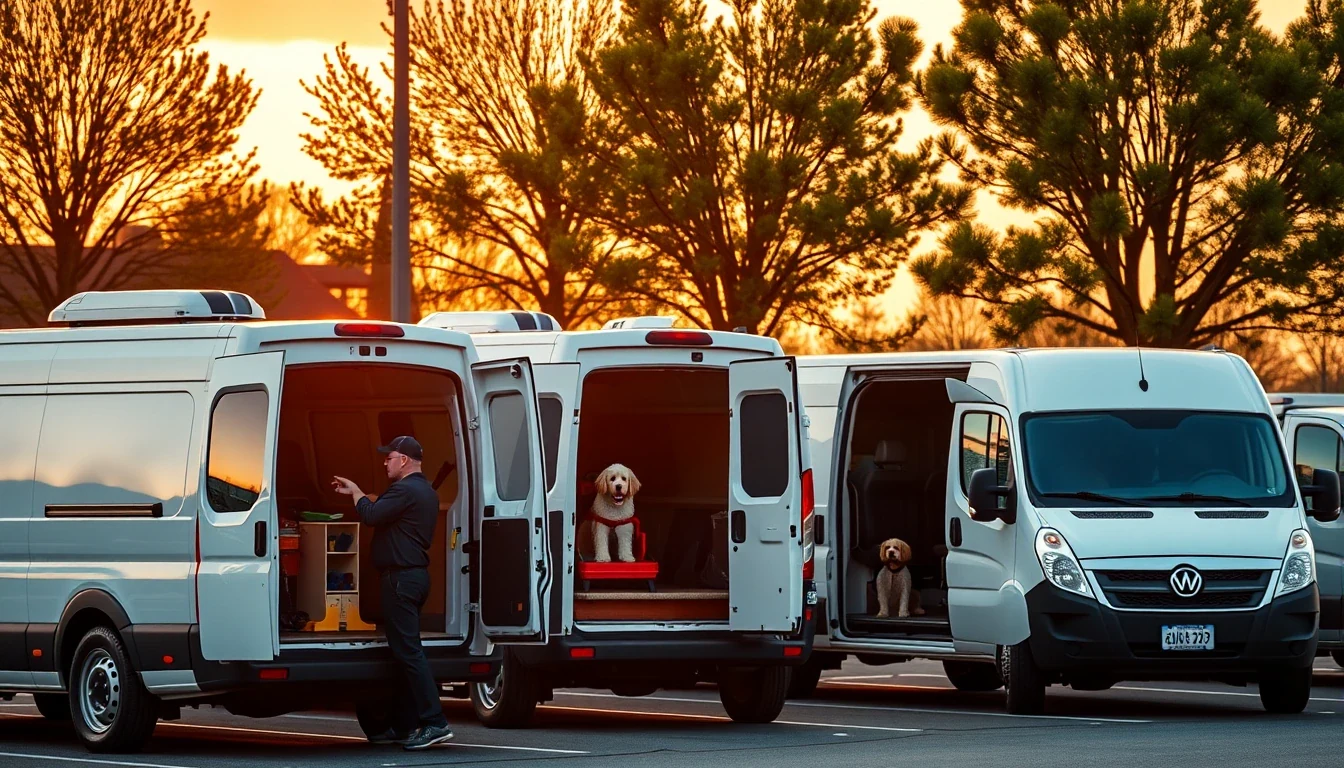
Cross-country routes typically 3-5 days. Per USDA 9 CFR Part 3, drivers stop every 4-6 hours for pet welfare checks (bathroom, water, exercise). Overnight at pet-friendly hotels. Drivers communicate daily with owners via call/text/photo. Local pet taxi work is shorter (same-day, multiple stops). Most operators dispatch routes 1-4 weeks ahead.
Flight nanny jobs: the in-cabin alternative to driving
Not every pet transport driver job happens behind a wheel. Flight nannies escort pets in the aircraft cabin, and it is a distinct lane with its own pay structure. Per-trip pay typically runs $350 for shorter flights up to around $1,300 for cross-country routes, with most nannies pocketing roughly $300 to $600 per trip after expenses. On an annual basis, ZipRecruiter-style data puts flight nanny earnings in the $37,000 to $58,000 range. The work suits people who already travel comfortably, can handle airline pet policies and health certificates, and want shorter engagements than a three-day cross-country drive. One notable data point worth knowing if you go independent: USDA-registered transporters reportedly win meaningfully more jobs than unregistered ones, so registration is a marketing asset, not just a legal box.
1099 vs W-2: what your classification actually changes
The single biggest financial fork in this field is whether you are an employee or a contractor, because it changes your taxes, your costs, and your protections.
| Factor | W-2 employee | 1099 independent |
|---|---|---|
| Who supplies the vehicle | Usually the operator | You |
| Who carries insurance | The operator | You |
| Payroll taxes | Employer pays half | You pay full self-employment tax |
| Schedule control | Operator dispatches | You choose loads |
| Benefits | Often included | None |
| Take-home ceiling | Lower, steadier | Higher, variable |
Most pet transport drivers on marketplaces like CitizenShipper, Shiply, and uShip are 1099 independent contractors, which means no taxes are withheld and you owe self-employment tax on top of income tax. Set aside roughly 25% to 30% of net for taxes from day one. W-2 roles with established operators trade a lower per-mile rate for the operator absorbing the vehicle, fuel, and insurance, plus payroll-tax sharing, which is often a better deal than the headline rate suggests for someone just starting out.
The hidden costs that eat independent driver pay
A $1.50-per-mile gross rate looks great until the expense column lands. The realistic deductions before you keep a dollar:
- Self-employment tax at roughly 15.3% on net earnings, on top of income tax
- Marketplace fees of 5% to 10% of each booking
- Fuel, the largest variable, swinging hard with diesel prices and load weight
- Commercial auto and pet bailee insurance, an unavoidable annual fixed cost
- Vehicle maintenance, tires, and depreciation on high-mile routes
- Deadhead miles, the empty return legs you drive but do not get paid for
Deadhead is the one new drivers underestimate most. Pricing only the loaded leg and ignoring the empty return is how an independent run that looked profitable ends up barely breaking even. Build return-leg recovery into every quote, and study real-route economics in our guide to pet transport cost per mile.
Building a reputation that wins repeat loads
On a bidding marketplace, your rating is your business. The drivers who clear the top of the pay range are not the cheapest bidders, they are the ones with deep, recent, specific reviews who can charge a premium because owners trust them with a living animal. The fastest ways to build that:
- Get USDA Class T registered early and display the number, since it both unlocks legal interstate work and signals legitimacy. Our USDA certified pet transport guide covers the process.
- Over-communicate on the first jobs, with photo and text updates at every stop, because those are the bookings that generate your foundational reviews.
- Specialize visibly. Drivers known for senior dogs, brachycephalic breeds, or medical transport command higher rates than generalists.
- Never cancel a booked load. A single no-show can sink a rating that took months to build.
If the goal is eventually running your own operation rather than driving for others, map the full path in how to start a pet transport business.
Frequently asked questions
How much do pet transport drivers make?
Do you need a CDL to drive pet transport?
What are the requirements to become a pet transport driver?
Where do I find pet transport driver jobs?
Can pet transport be a side hustle?
Is pet transport driving safe?
How do I start my own pet transport business?
Do pet transport drivers travel overnight?
How much does a pet flight nanny make per trip?
Are pet transport drivers 1099 or W-2?
What costs reduce an independent driver's take-home pay?
Pay data from operator job postings (Indeed, ZipRecruiter, company career pages) and marketplace driver earnings disclosures (May 2026). Requirements per 9 CFR Part 3. We refresh quarterly.
Sources & references
- aphis.usda.gov https://www.aphis.usda.gov/aphis/ourfocus/animalwelfare
- ecfr.gov https://www.ecfr.gov/current/title-9/chapter-I/subchapter-A/part-3
- citizenshipper.com https://www.citizenshipper.com/become-a-driver
- shiply.com https://www.shiply.com