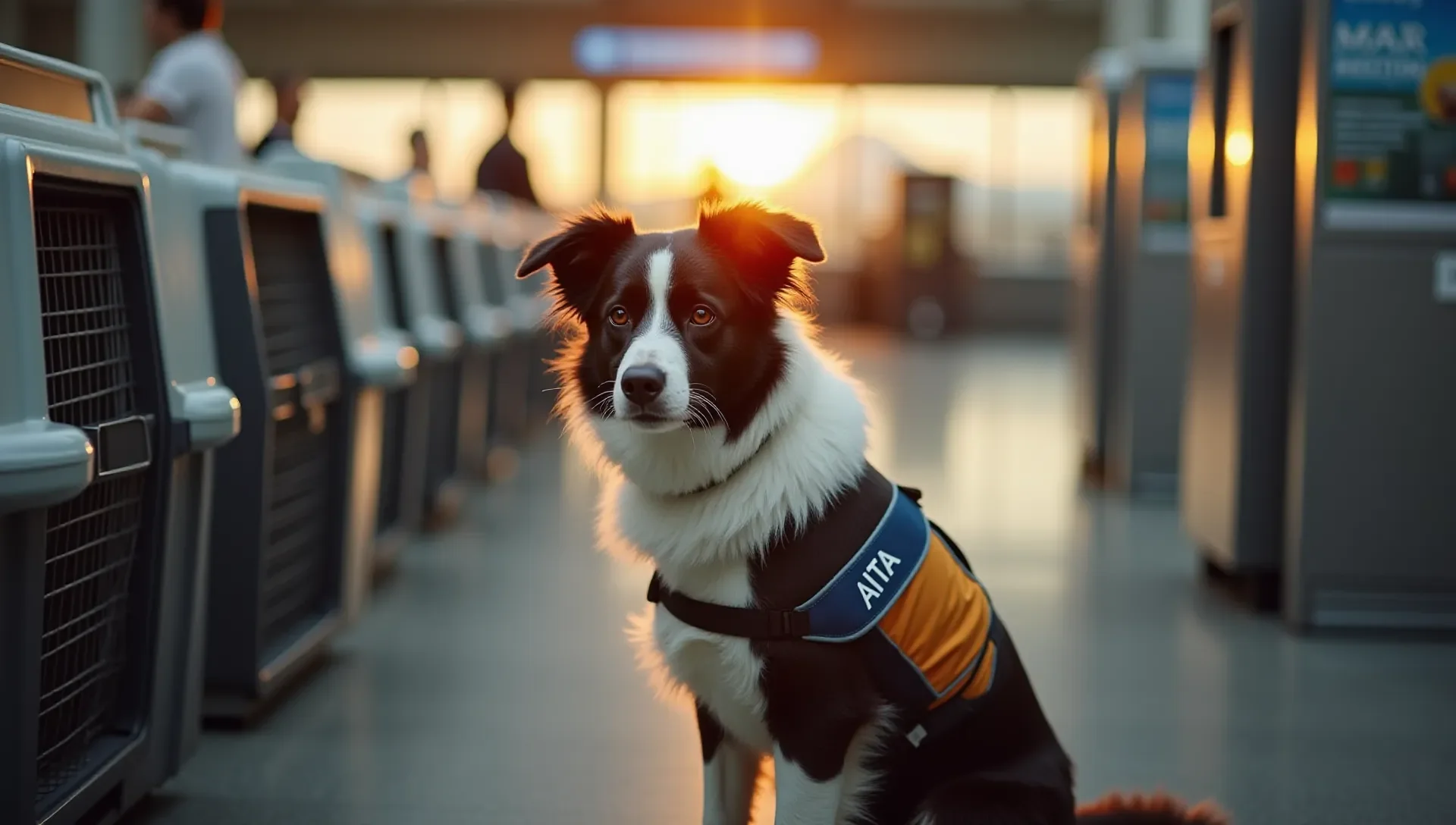
New Zealand has the strictest pet import rules in the developed world. From the US you need an MPI import permit, a rabies titer test taken at least 6 months before travel, multiple parasite treatments, a 10-day minimum quarantine at the Auckland PEQ facility, and roughly 7 months of prep. Total cost runs $5,000 to $10,000+ per pet.
The New Zealand Ministry for Primary Industries (MPI) protects one of the planet's most isolated biosecurity zones. That isolation is the reason your dog can spend two years there without ever encountering rabies, parvo in soil, ehrlichia, or screwworm. It is also why moving a pet there costs more, takes longer, and breaks more often than any other route.
This is the honest guide. The cheerful operators' websites underplay the timeline and the cost. We talked to three pet relocators who handle this route weekly, pulled current MPI standards, and ran the numbers on a real 2026 cat and dog move.
Related reading: Traveling With a Dog in an RV.
For a deeper dive, see our guide to road trip with a dog: the complete checklist and what to pack.
Related reading: pet transport to switzerland from the us: dog and cat import requirements (2026 guide).
If you are weighing your options, our guide to puppy's first car ride: prepare for the trip home and build lifelong car confidence goes further.
New Zealand requires advance permission to bring an animal in, which we cover in the pet import permit.
The 7-month timeline, working backwards
Most pet transport to other countries can be done in 90 days. New Zealand cannot. The rabies antibody titer (FAVN test) must be drawn at least 180 days before arrival, and the test result must be valid at the time the pet enters NZ. Miss that window and the entire process restarts.
| Days before arrival | Action |
|---|---|
| 210 days | Confirm ISO-15 microchip implanted; rabies vaccine current |
| 200 days | Booster rabies if needed; FAVN blood draw at USDA-approved lab (Kansas State KSVDL) |
| 180 days | Earliest acceptable FAVN result date for NZ entry |
| 120 days | Apply for MPI import permit (valid 12 months) |
| 60 days | Book flight on Air NZ cargo or partner carrier (Singapore Airlines, Qantas) |
| 45 days | Reserve quarantine slot at Auckland PEQ Mangere |
| 30 days | Internal and external parasite treatments begin (specific schedule by species) |
| 10 days | USDA-accredited vet health certificate |
| 7 days | USDA APHIS endorsement |
| 2 days | Final parasite treatment (within 4 to 30 hours of departure for dogs) |
| 0 | Arrival Auckland AKL, transfer to PEQ Mangere for 10-day quarantine |
The 6-month rabies titer wait is the choke point. There is no shortcut, no rush option, no exception.
Approved countries: the US is on the list
NZ classifies countries into three groups: rabies-free (Group 2: UK, Ireland, Sweden, Norway, etc.), rabies-controlled (Group 3: US, Canada, EU, Singapore, Australia and others), and not approved (everywhere else). The US is Group 3, which means import is allowed with the full protocol. Pets coming from non-approved countries cannot enter at all, even via a third country, unless they spend 6 months in a Group 2 or 3 country first.
Only cats and dogs are permitted. NZ does not allow ferrets, rabbits, reptiles, birds (with narrow exceptions), or rodents under standard import rules.
Required tests and treatments
For dogs, from the MPI Cats and Dogs Import Health Standard:
- Rabies vaccination, current, with the FAVN titer drawn 6+ months before arrival and result ≥0.5 IU/ml
- Leptospirosis vaccination (4-strain) within 12 months and at least 14 days before travel
- Brucella canis blood test within 30 days of departure (intact dogs only, but recommended for all)
- Internal parasite treatment twice in the 30 days before travel, last dose 24 to 30 hours before departure
- External parasite treatment with an MPI-approved product twice in the 30 days before
- Heartworm test (4DX or equivalent) within 30 days
- Babesia gibsoni PCR if the dog has spent time in certain regions
For cats:
- Rabies vaccination + FAVN titer same as dogs
- FIV antibody test within 30 days
- Internal and external parasite treatment same schedule
- No leptospirosis or brucella requirements
Skipping or mis-timing any single item triggers a re-do plus a delayed flight. Pet relocators who do this route routinely use a project-management spreadsheet that we recommend you replicate.
Auckland quarantine: PEQ Mangere
There is only one approved import quarantine facility for cats and dogs in New Zealand: PEQ Mangere near Auckland Airport. Minimum stay is 10 days for pets from Group 3 countries (the US). Stays can extend if testing flags issues.
Real 2026 costs at PEQ Mangere:
- Single dog 10 days: NZD $2,400 to $2,800 (roughly USD $1,450 to $1,700)
- Single cat 10 days: NZD $1,900 to $2,200
- Multi-pet shared housing discount: 10 to 15%
You book the quarantine slot before booking the flight. PEQ runs near capacity in NZ summer (Dec-Feb) and you may wait 2 to 3 months for an open slot.
Approved airlines: Air NZ and a short list of partners
Only Air New Zealand cargo and a handful of partner carriers ship pets into AKL. Singapore Airlines (via SIN), Qantas (via SYD with a check-through to AKL), and occasionally Cathay Pacific (via HKG) are the working options. American, United, and Delta do not move pets to NZ.
Lead time on Air NZ cargo bookings is 60 to 90 days. The aircraft must have an active-environment hold (climate, pressure, lighting) and that limits which flights take live animals.
Typical USD cargo cost LAX or SFO to AKL via direct Air NZ: $2,500 to $4,500 depending on crate size. Add $300 to $700 for ground handoff between airport and PEQ Mangere.
Total cost breakdown for a real 2026 move
35-lb dog, LAX to Auckland, mid-tier operator handling end-to-end:
| Line item | USD cost |
|---|---|
| FAVN rabies titer (KSVDL) | $130 |
| Vet visits, vaccines, parasite treatments | $600 to $900 |
| Brucella, heartworm, additional PCR tests | $250 to $400 |
| MPI import permit | NZD $292 ($175) |
| USDA APHIS endorsement | $173 (rush) |
| IATA crate (size 400) | $200 to $300 |
| Air NZ cargo LAX to AKL | $3,200 to $4,200 |
| PEQ Mangere 10-day quarantine | $1,550 |
| Pet relocator project fee | $2,500 to $4,000 |
| Ground delivery PEQ to home address | $200 to $500 |
| Total | $8,978 to $12,373 |
Owners who manage the project themselves and skip the relocator save $2,500 to $4,000, but the failure rate goes up sharply for first-timers. The paperwork stack is dense and MPI does not extend grace for honest mistakes.
For comparison with another tough Oceania route, see pet transport to Australia, which uses similar but slightly less brutal protocols.
Top 3 specialist relocators for NZ
PetRelocation
Highest cost, lowest failure rate. PetRelocation has moved hundreds of pets to AKL and assigns a dedicated coordinator to NZ jobs. Pricing $9,000 to $13,000 all-in for a medium dog. They build the timeline backwards from your move date and project-manage every vet appointment.
Worldcare Pet Transport
Boutique, IPATA-accredited, NZ-specialist. Worldcare is on MPI's informal short list of preferred operators. Quotes run $8,000 to $11,000. Read our full Worldcare Pet Transport review for the breakdown.
Jetpets
Australian operator with deep AKL experience. Useful if you are doing a US-AU-NZ multi-stop move or want someone with offices in Sydney to manage the AU side of any KLM/QF routing. Pricing $7,500 to $10,000.
We do not recommend bargain-quote relocators for this route. The cost of a failed move (returned pet, restart of 6-month titer wait, additional quarantine) far exceeds the savings.
Brachycephalic and senior pets
Air NZ embargoes most brachycephalic breeds (Bulldogs, French Bulldogs, Pugs, Boxers, Persians, Himalayans) on its cargo flights to NZ. Some owners route via Singapore on Singapore Airlines, which has a slightly more permissive snub-breed policy, but the longer journey carries its own risks. Senior pets and those with chronic conditions need a vet fitness-to-travel sign-off; many vets will refuse to certify pets over 12 years old for a journey this long. See our pet transport for senior dogs guide for the deeper consideration.
What can go wrong
Things that have actually wrecked NZ moves we have seen:
- Microchip implanted after rabies vaccine. Restart vaccine, restart titer, lose 6+ months.
- FAVN titer below 0.5 IU/ml. Re-vaccinate, retest, lose 30 to 90 days.
- Health certificate older than 10 days. Pet refused at AKL, returned to origin.
- Parasite treatment timing off by more than 6 hours. Treatment redone in NZ at owner cost, quarantine extended.
- Quarantine slot lost. Flight booked before slot confirmed, then no PEQ space for 6 weeks.
Build redundancy into every step. A relocator who has done NZ at least 20 times is worth the fee.