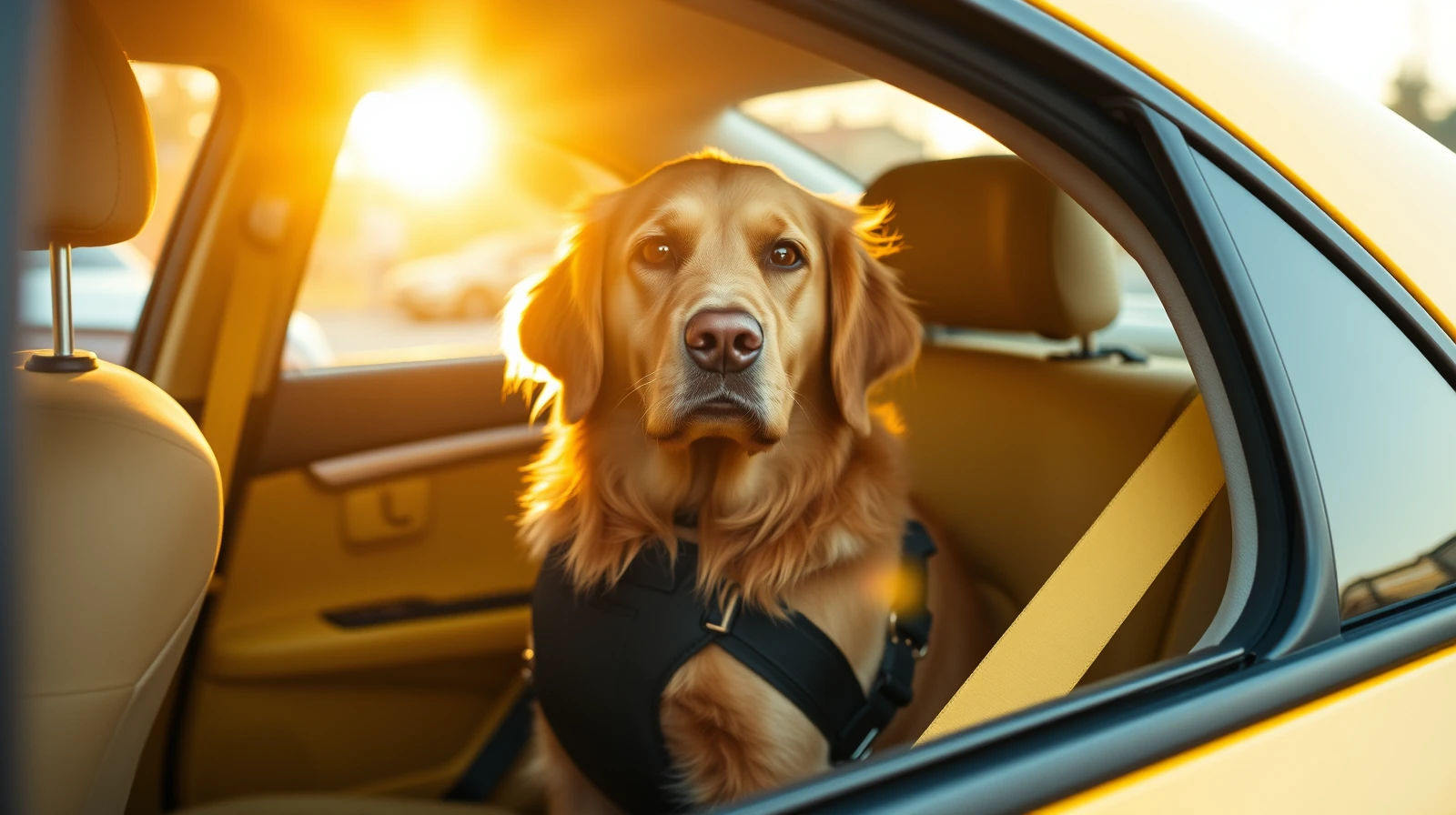
There is no government crash standard for pet restraints, so the only real signal is independent certification: the Sleepypod Clickit Sport Plus is the only car harness currently certified by the Center for Pet Safety. For small dogs under 25 lb, the CPS-certified ZuGoPet Rocketeer is the safer pick.
There is no government crash standard for pet restraints, so the only real signal is independent certification: the Sleepypod Clickit Sport Plus is the only car harness currently certified by the Center for Pet Safety (CPS). For small dogs under 25 lb, the CPS-certified ZuGoPet Rocketeer is the safer pick, and for crate travelers the Gunner G1 and Lucky Duck kennels pass the same protocol.
Still comparing gear? Our roundup of the Best Dog Boots and Booties for Winter covers the current top picks.
Still comparing gear? Our roundup of the Best Portable Dog Water Bottles for Travel covers the current top picks.
See also Best Dog Door.
Gearing up for your pet? Compare our pick for the Best Dog Cooling Mat.
Driving a pickup? A harness belongs in the cab, not tied in the bed. Our guide to dog in truck bed laws explains what each state requires and why tethering alone is risky.
Why "crash tested" means almost nothing on its own
The single most important thing to understand before you spend a cent: in the United States there is no Federal Motor Vehicle Safety Standard for pet restraints. Child seats must pass FMVSS 213, the federal child-restraint standard, before they can be sold. Dog harnesses face no such requirement. A manufacturer can print "crash tested" on a box after a single sled run with no pass/fail threshold, no independent witness, and no published data. The phrase is marketing, not a guarantee.
That matters because the safety case is real. The American Veterinary Medical Association advises that dogs should ride restrained rather than loose in the vehicle, since an unrestrained pet can be thrown forward in a sudden stop or collision and is also a distraction for the driver. A widely cited illustration from pet-safety advocates estimates that a 60-pound dog in a 35 mph crash can generate force on the order of a 2,700-pound load, which gives a sense of why restraint matters. A 2010 AAA survey found that while more than 80% of drivers recognize the risk of an unrestrained pet, only about 16% actually use a restraint. The gap between what looks safe and what is proven safe is exactly where the "crash tested" label lives.
Gearing up for your pet? Compare our pick for the Best Elevated Dog Bowl.
The two signals that actually mean something
When you strip away the marketing, only two things separate a genuinely protective restraint from a glorified seatbelt clip.
Gearing up for your pet? Compare our pick for the Best Dog Nail Grinder.
1. Center for Pet Safety (CPS) certification
The Center for Pet Safety is an independent, non-profit research and advocacy organization. It runs the only credible third-party certification for pet restraints in the US. CPS certification means a product was crash-tested to the center's own published protocol at 30 mph, using specially engineered crash-test dogs in three sizes (a 25-pound terrier mix, a 45-pound border collie, and a 75-pound golden retriever) modeled on the FMVSS 213 child-seat procedure. To pass, the restraint must keep the test dog on the seat, prevent catastrophic hardware failure, keep head and body excursion within limits, and perform consistently across every size offered. CPS takes no money from the manufacturers whose products it certifies.
2. Testing referenced to FMVSS 213
The next-best signal is a manufacturer that openly tests to the FMVSS 213 child-restraint standard at a named, accredited facility and publishes its methodology. This is weaker than CPS certification because the brand grades its own homework, but a transparent FMVSS 213 sled program (with the test conditions and excursion results disclosed) is far more credible than a vague "crash tested" claim with no numbers. Several reputable harnesses sit in this tier.
The 2013 CPS study that reset expectations
The reason this whole category exists is the Center for Pet Safety's landmark 2013 Harness Crashworthiness Study, sponsored by Subaru of America. CPS selected 11 harness brands that all claimed "testing," "crash testing," or "crash protection," then ran them through FMVSS 213 crash conditions with the engineered test dogs. According to CPS, the results were sobering: most harnesses did not pass, with test dogs coming off the seat, some hardware failing, and in several cases restraint geometry that CPS reported could contribute to neck or spinal injury in a real crash.
Only a handful of products survived. The Sleepypod Clickit Utility was named a 2013 Top Performer for keeping the test dog controlled and on the seat across every run. That study is why "crash tested" claims deserve skepticism, and why the short CPS-certified list below carries so much weight more than a decade later.
Best crash-tested dog car harnesses and seats for 2026
Here is the honest landscape. We have split it into three tiers: CPS-certified harnesses (the strongest proof tier), credibly FMVSS 213-tested harnesses (strong but self-certified), and CPS-certified carriers/crates for small dogs and crate travelers. All prices below are approximate US retail as of mid-2026, vary by size and color, and change often, so treat them as a rough guide and confirm the current price at the retailer before buying.
| Product | Type | CPS status | Dog size range | Approx. price |
|---|---|---|---|---|
| Sleepypod Clickit Sport Plus | Harness | Certified (5-star) | Up to ~90 lb (small rated to 25 lb) | $90-$130 |
| ZuGoPet Rocketeer Pack | Harness / carrier hybrid | Certified (5-star) | Under 25 lb | $130-$170 |
| Kurgo Enhanced Strength Tru-Fit | Harness | Not CPS-certified; tested to FMVSS 213 | Up to 75 lb | $45-$70 |
| Ruffwear Load Up | Harness | Not CPS-certified; FMVSS 213 sled-tested | ~15-100+ lb (XS-XL) | $80-$100 |
| EzyDog Drive | Harness | Not CPS-certified; tested in Australia to child-restraint standards | ~14-100+ lb | $60-$90 |
| Gunner G1 Kennel | Crate | Certified (5-star) | Up to 30 / 45 / 75 lb by size | $500-$800+ |
| Lucky Duck / Lucky Kennel | Crate | Certified | Up to 75 lb (Intermediate) / 110 lb (Large) | $350-$600 |
Sleepypod Clickit Sport Plus - the only CPS-certified harness
If you want a harness with the strongest possible proof behind it, this is the one. Sleepypod is the only company whose harnesses have passed the Center for Pet Safety crash-test protocol, and the Clickit Sport line carries a 5-star CPS rating. It uses a broad, padded vest and a patented Infinity Loop webbing design with three points of contact to spread crash forces across the dog's chest and shoulders instead of the neck, and to limit both forward and lateral movement.
- Who it's for: medium-to-large dogs (CPS rates the small to 25 lb and the medium, large, and XL to 90 lb) whose owners want certified protection.
- Pros: only CPS-certified harness; crash-tested to US, Canadian, and EU child standards; chest-loading geometry; doubles as a walking harness.
- Cons: premium price; bulkier than everyday harnesses; you must thread the vehicle seatbelt correctly for it to perform.
- Sizing: measure girth at the widest part of the ribcage and follow Sleepypod's chart exactly; a loose fit defeats the excursion control.
ZuGoPet Rocketeer Pack - the CPS pick for small dogs
Small dogs are a special case, and the brief here is non-negotiable: little dogs need a carrier-style restraint, not a strap harness, because their bodies cannot absorb crash forces the way a larger dog's frame can. The ZuGoPet Rocketeer Pack is CPS-certified with a perfect 5-star score and is the only certified multifunctional restraint built specifically for dogs 25 lb and under. It holds the dog upright and anchors to the seat much like a child seat, then converts to a front or backpack carrier off the road.
- Who it's for: toy and small breeds under 25 lb.
- Pros: CPS-certified for the size class where ordinary harnesses are riskiest; developed over years with input from veterinarians and spinal surgeons; doubles as a carrier.
- Cons: price; strictly capped at 25 lb; a learning curve for the multi-mode setup.
Kurgo Enhanced Strength Tru-Fit - the value FMVSS 213 option
The Kurgo Enhanced Strength Tru-Fit is the most affordable harness here with a transparent test program. Kurgo crash-tests at a university sled facility using FMVSS 213 child-restraint conditions and rates the harness for dogs up to 75 lb. It is not CPS-certified, so it sits in the second tier, but its all-steel nesting buckles, padded chest plate, and five adjustment points make it a credible everyday-plus-travel choice at roughly half the price of a Sleepypod.
- Who it's for: budget-conscious owners of dogs up to 75 lb who want documented testing.
- Pros: published FMVSS 213 methodology; steel hardware; five-point fit; includes a seatbelt tether.
- Cons: not CPS-certified; the included tether's effectiveness depends on a snug fit and correct attachment.
Ruffwear Load Up - well-built but honest about its limits
The Ruffwear Load Up deserves credit for unusual candor. Ruffwear sled-tested it under FMVSS 213 conditions and the dog mannequin stayed upright and on the seat in all three runs. But the company states plainly on its own site that the Load Up has not passed the CPS protocol and would not meet CPS certification because of the forward-excursion limits. That transparency is exactly what you want from a manufacturer, and the harness is comfortable with strength-rated metal hardware. Just buy it knowing it is a tier-two product by the company's own admission.
EzyDog Drive - crash-tested abroad, not CPS-certified
The EzyDog Drive was crash-tested at Australia's Automotive Safety Engineering facility against child-restraint standards recognized by US, EU, and Australian regulators. Like the Ruffwear, it is not Center for Pet Safety certified. It is a well-regarded comfort-and-control harness with a wide chest panel, and a reasonable pick if you cannot find a Sleepypod in your dog's size, but it does not carry the top-tier proof.
Gunner G1 and Lucky Duck kennels - the crate route
For many owners a crate is a strong option rather than a harness. A CPS-certified crash crate is among the most protective restraint options available for car travel. The Gunner G1 Kennel earned a 5-star CPS rating and is certified in three sizes (small to 30 lb, medium to 45 lb, intermediate to 75 lb). CPS also certifies the Lucky Duck Lucky Kennel in Intermediate (up to 75 lb) and Large (up to 110 lb). Crates cost more and demand cargo space, but they offer a rigid protective shell around your dog. We cover the trade-offs in depth in our best pet transport crate guide.
How to choose: a quick decision framework
- Dog under 25 lb: use a CPS-certified carrier-style restraint (ZuGoPet Rocketeer) or a small certified crate. Do not use a strap harness as the primary restraint.
- Dog 25-75 lb, want the best proof: Sleepypod Clickit Sport Plus (CPS-certified) or a Gunner G1 crate.
- Dog 25-75 lb on a budget: Kurgo Enhanced Strength Tru-Fit (FMVSS 213-tested, second tier).
- Dog over 75 lb: a large certified crate (Lucky Kennel Large to 110 lb) or the Sleepypod XL within its 90 lb rating.
- Frequent long-haul or air travel: a certified hard crate, since it doubles for cargo and overnight stays.
Fitting and use mistakes that cancel out the testing
A certified restraint only protects your dog if you use it correctly. The biggest errors:
- Never clip a restraint to a neck collar. In a crash that concentrates the deceleration force on the dog's neck and spine. Crash forces should load the chest and shoulders instead, which is the whole point of a vest-style harness.
- Do not size up "for comfort." A loose harness lets the dog travel farther in a crash (more excursion) and can let it slip out entirely. Measure and fit to the chart.
- Thread the vehicle seatbelt as the maker specifies. Many harnesses rely on the car's own belt or a short, rated tether anchored to the seatbelt receiver, not a long stretchy lead.
- Put the dog in the back seat. A deploying front airbag can seriously injure a restrained dog, the same reason children are kept in the back seat.
- Replace after any crash. Like a child seat, a restraint that has absorbed a real impact should be retired.
For the full step-by-step on securing a dog before you pull out of the driveway, see our guide to how to transport a dog in a car, and for longer journeys our overview of how to transport a pet. If you are moving cross-country or using a professional service, it is worth understanding pet transport insurance and what it covers.
How we sourced this
Every certification claim here was checked against the Center for Pet Safety's published CPS-certified lists and the 2013 study summary, not manufacturer marketing. Where a product is tested but not CPS-certified, we say so and link the company's own disclosure. Sizes, weight ratings, and test protocols come from CPS and the manufacturers' technical pages; prices are approximate US retail observed in mid-2026. We do not accept payment for placement or ratings. As an independent editorial site we may earn an affiliate commission if you buy through some links, which never changes the verdicts above. See our full review methodology on the reviews hub.
Are dog car harnesses required by law?
What is the only CPS-certified dog car harness?
Is the Ruffwear Load Up crash tested?
What does FMVSS 213 have to do with dog harnesses?
Why can't small dogs just use a regular harness?
Should I ever clip the restraint to my dog's collar?
Is a crate safer than a harness for car travel?
How much should I expect to spend on a safe restraint?
Sources & references
- centerforpetsafety.org https://www.centerforpetsafety.org/test-results/harnesses/
- centerforpetsafety.org https://www.centerforpetsafety.org/2013-harness-crash-test-study-results/
- centerforpetsafety.org https://www.centerforpetsafety.org/cps-certified/sleepypod-clickit-sport/
- centerforpetsafety.org https://www.centerforpetsafety.org/cps-certified/zugopet-rocketeer-pack/
- centerforpetsafety.org https://www.centerforpetsafety.org/cps-certified/gunner-kennel-g1-intermediate/
- nhtsa.gov https://www.nhtsa.gov/laws-regulations/fmvss
- avma.org https://www.avma.org/resources-tools/pet-owners/petcare/pets-vehicles
- kurgo.com https://www.kurgo.com/enhanced-strength-tru-fit-smart-harness
- ruffwear.com https://ruffwear.com/pages/load-up-car-harness-testing-design