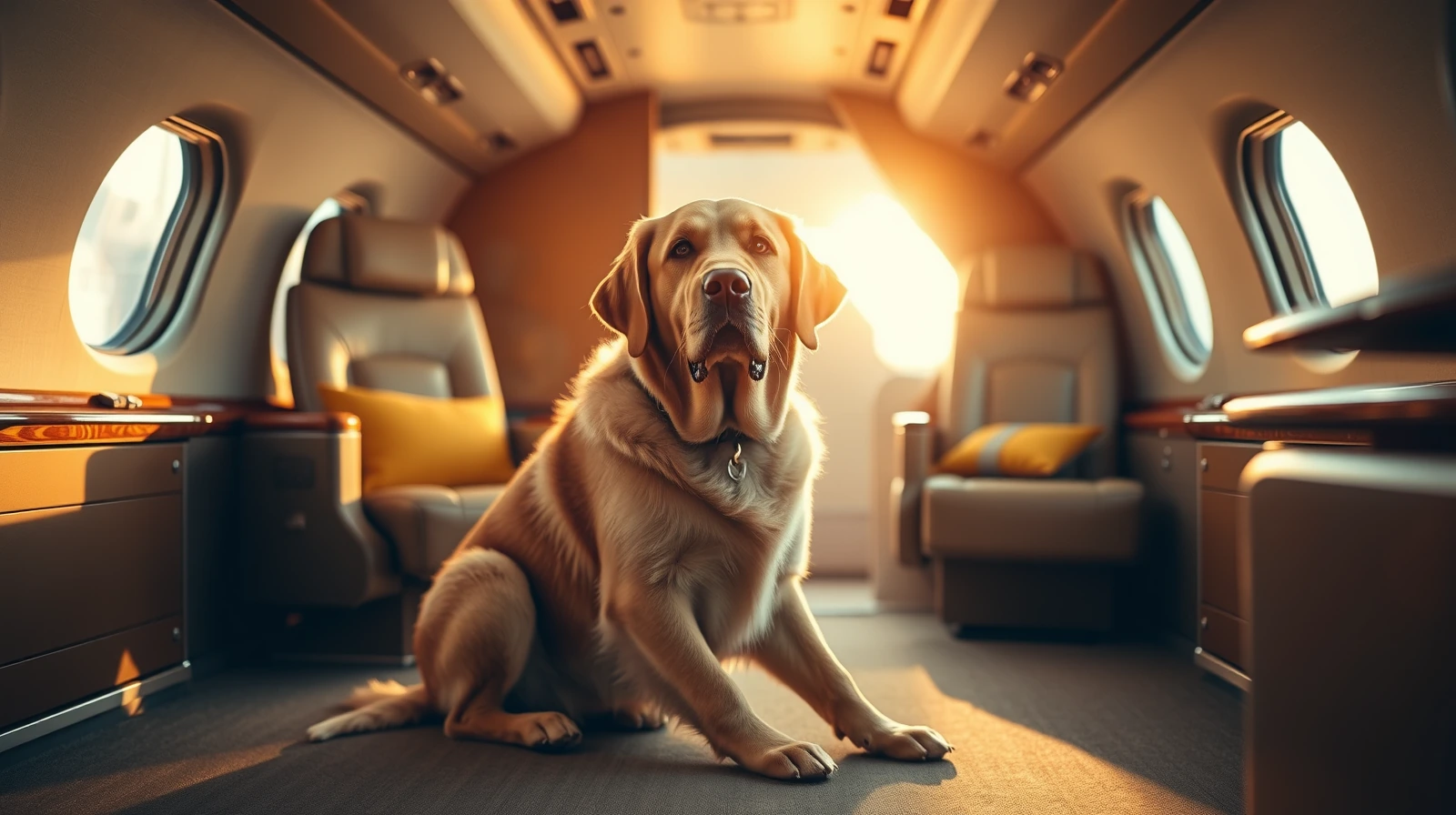
Standard commercial airlines do not allow large dogs in the passenger cabin, only small dogs that fit under the seat. Real options for big dogs are pet charter flights, semi-private carriers, trained service dogs, or cargo. Confirm every policy directly before booking.
If you have ever tried booking a flight for a 70-pound Labrador, you have hit the wall every big-dog owner hits: standard commercial airlines do not allow large dogs in the passenger cabin. The cabin is reserved for small dogs that fit inside a soft carrier under the seat in front of you, plus trained service dogs. Everything bigger goes in the cargo hold as manifest cargo, or it does not fly on that airline at all. That single rule sends most owners scrambling for alternatives, and the good news in 2026 is that real alternatives now exist. This guide decodes what counts as "large," why the cabin door is shut for big dogs, and the genuine options: pet-dedicated charters, semi-private carriers, the service-dog route, and cargo done safely.
Size changes the math, so it is worth reviewing the cost to transport a large dog before you commit.
When the cabin is not an option, the full large-dog transport options cover cargo, accompanied checked, and ground.
A cancelled or delayed flight raises its own separate set of questions for a traveling pet; see our guide to what happens if your flight is cancelled with a pet.
Why standard airlines say no to large dogs in the cabin
The constraint is physical, not bureaucratic. Major US carriers (American, United, Delta, Alaska, and others) only permit a pet in the cabin if the animal and its carrier fit fully under the seat in front of the passenger. That under-seat space is small, typically a soft carrier no larger than roughly 18 x 11 x 11 inches, and the dog must be able to stand and turn around inside it. A dog that satisfies that test is, by definition, a small dog: usually under about 20 pounds. There is no premium fee, no extra seat purchase, and no waiver on standard commercial flights that buys a large dog a spot in the cabin. The only exceptions are trained service animals, which are not pets under the rules.
What counts as "large" for flying purposes
There is no single legal definition, but the practical line is the under-seat carrier. If your dog cannot fit comfortably in a soft carrier that slides under the seat, the airline treats it as too big for the cabin. In rough terms:
- Small (cabin-eligible): generally under about 20 pounds and short enough to stand in a soft carrier roughly 18 inches long.
- Medium to large (cabin-ineligible on standard airlines): most dogs over about 20 to 25 pounds, including nearly every retriever, shepherd, pointer, husky, and bully breed.
- Giant breeds: mastiffs, Great Danes, and similar may exceed even some cargo crate limits and require freight handling.
Breed matters too. Snub-nosed (brachycephalic) breeds face cargo bans on many carriers because of breathing risk at altitude. If your dog is a bulldog, boxer, pug, or similar, read our guide on the snub-nosed dog breeds flying ban before assuming cargo is even available.
Option 1: Pet-dedicated charter flights (no size limit, in cabin)
The cleanest answer to flying with a large dog in cabin is a flight built around dogs. A small number of operators charter aircraft where dogs of any size ride in the main cabin with their humans, no crate in the hold, no weight cap.
- BARK Air runs dog-first flights where the dog flies in the cabin regardless of size. Routes have included US city pairs and select international legs, and the experience is marketed around the dog rather than the passenger. Pricing is premium and reported per dog-plus-human ticket, and routes rotate, so check current availability at barkair.com.
- K9 Jets operates semi-private and private dog-friendly charters, including transatlantic routes, with no size or weight limit on dogs in the cabin. Seats are sold per traveler with the dog flying alongside. Reported pricing runs into the thousands per route, so confirm directly at k9jets.com.
These services solve the size problem entirely, but they are the expensive end of the market and routes are limited. They suit international moves, anxious dogs, and owners who will not put a pet in cargo under any circumstances.
Option 2: Semi-private carriers (buy a seat for your dog)
Between full charter and standard commercial sits a growing semi-private tier. These carriers fly smaller aircraft, often from private terminals, and some let larger dogs travel in the cabin, sometimes in their own purchased seat.
- JSX is a public charter that boards from private terminals. Pets in the cabin must fit in a carrier under the seat, with a reported maximum carrier size near 17 x 13 x 11 inches, so it works for the upper end of small dogs rather than true large dogs. Some travelers buy an adjacent seat for space. Verify the current pet policy at jsx.com.
- Tradewind Aviation flies regional routes and has historically allowed larger dogs in the cabin on certain aircraft, with reports that dogs over roughly 100 pounds may need a separate purchased seat. Aircraft type drives what is possible, so confirm per route at tradewindaviation.com.
- RetrieveAir is a newer entrant focused on dog travel, reporting no weight or height limit and lap, legroom, or own-seat options for dogs since 2025. Routes and schedules are limited and evolving, so check the operator's main site directly before planning around it.
The semi-private tier is cheaper than a full charter and more flexible than commercial, but coverage is route-dependent. A large dog may fly cabin on one carrier's aircraft and not another, so the aircraft, not the brand, is the real variable.
Comparing the charter and semi-private options
The table below summarizes the dog-friendly operators that can put a large dog in or near the cabin. Treat every figure as a starting point: routes, weight policies, and pricing on these services change frequently, and several add or drop city pairs season to season. Confirm directly with the operator before you book.
| Service | Large dog in cabin? | Size / weight policy | Rough cost & availability note |
|---|---|---|---|
| BARK Air | Yes, any size | No weight or size limit, dog flies in cabin | Premium reported pricing per dog-plus-human; rotating routes, confirm directly |
| K9 Jets | Yes, any size | No weight or size limit on cabin dogs | Thousands per route reported, including transatlantic; limited dates |
| JSX | Small dogs only | Carrier must fit under seat, reported max near 17 x 13 x 11 in | Commercial-style fares plus pet fee; buy adjacent seat for room |
| Tradewind Aviation | Often, by aircraft | Larger dogs on certain aircraft; over ~100 lb may need own seat | Regional fares; policy varies by route and plane, confirm directly |
| RetrieveAir | Yes, reported | Reported no weight or height limit; lap, legroom, or own seat since 2025 | New and limited routes; verify current schedule before planning |
Option 3: Service dogs fly cabin on regular airlines
If your large dog is a trained service animal, the rules flip. Under US Department of Transportation rules, a trained service dog travels in the cabin at the handler's foot space at no charge, regardless of breed or size, provided it fits in the handler's foot space or an adjacent purchased seat without obstructing the aisle. This is the one path that puts a large dog in the cabin of a mainstream airline.
- What qualifies: a dog individually trained to do work or perform tasks for a person with a disability. Emotional support animals no longer qualify as service animals under current DOT rules and are treated as pets.
- Documentation: airlines require the DOT Service Animal Air Transportation Form attesting to the dog's health, training, and behavior. Some require it submitted in advance.
- Airlines that accept large service dogs in cabin: Delta, United, American, Alaska, Air Canada, and Lufthansa among others, each with their own forms and advance-notice windows.
Read the framework on the US DOT service animal page and the specific carrier rules such as the Delta service animal policy. This route is only legitimate for genuinely trained service dogs. Misrepresenting a pet as a service animal is illegal in many states and undermines access for handlers who depend on it.
Option 4: Cargo, the mainstream route for big dogs
For most large dogs flown on a standard airline, the hold is the only option. Manifest cargo on passenger airlines is pressurized and temperature-controlled, and millions of pets fly this way each year. It is not the horror story it is sometimes painted as, but it does carry real risk and demands preparation.
- Use an airline-compliant crate. It must meet IATA standards: rigid, ventilated on multiple sides, with the dog able to stand, turn, and lie down. See our picks for the best pet transport crate.
- Mind temperature embargoes. Airlines refuse cargo pets when ground temperatures are too hot or too cold, common in summer and winter, which can cancel travel on short notice.
- Check breed restrictions. Snub-nosed breeds are barred from cargo on many carriers for safety reasons.
- Book direct flights where possible. Connections add handling, heat exposure, and the risk of a missed transfer.
- Follow vet guidance. The AVMA travel guidance advises against sedation for most dogs in cargo, since it can impair breathing and balance at altitude.
Weigh cargo against the alternatives honestly. Our breakdown of pet cargo vs in-cabin walks through the tradeoffs, and Lufthansa is one carrier with a well-documented animal program detailed on our Lufthansa pet transport page.
How to choose for your dog and budget
There is no single best answer, only the best fit for your dog's size, your route, and your budget. A practical decision path:
- Budget is the main constraint, dog is healthy and crate-trained: cargo on a direct flight outside temperature embargoes.
- You will not consider cargo, and money is flexible: a pet charter such as BARK Air or K9 Jets, especially for international moves.
- You want cabin travel at a lower price on a covered route: a semi-private carrier like Tradewind or RetrieveAir, confirming the aircraft allows your dog's size.
- Your dog is a trained service animal: book the cabin on a mainstream airline with the DOT form.
Whatever you choose, start early. Cabin pet slots, cargo bookings, and charter dates all fill, and policies shift. For a full walkthrough of the logistics, see our guides on flying with a dog in cabin, the broader pet airlines overview, and the step-by-step on how to transport a pet. The headline holds: for a large dog, the cabin on a standard airline is off the table, but charters, semi-private carriers, the service-dog route, and well-run cargo are all real paths in 2026.
Frequently asked questions
Can a large dog fly in the cabin on a regular commercial airline?
What size dog is too big for the cabin?
How can a big dog fly in the cabin then?
How much does it cost to fly a large dog in the cabin on a charter?
Is flying a large dog in cargo safe?
Do airlines allow large service dogs in the cabin?
Can I buy an extra seat so my big dog can sit next to me?
Are snub-nosed large breeds banned from flying?
Sources & references
- barkair.com https://www.barkair.com/
- k9jets.com https://www.k9jets.com/
- jsx.com https://www.jsx.com/
- tradewindaviation.com https://www.tradewindaviation.com/
- delta.com https://www.delta.com/us/en/accessible-travel-services/service-animals
- transportation.gov https://www.transportation.gov/individuals/aviation-consumer-protection/service-animals
- avma.org https://www.avma.org/resources-tools/pet-owners/petcare/traveling-your-pet-faq