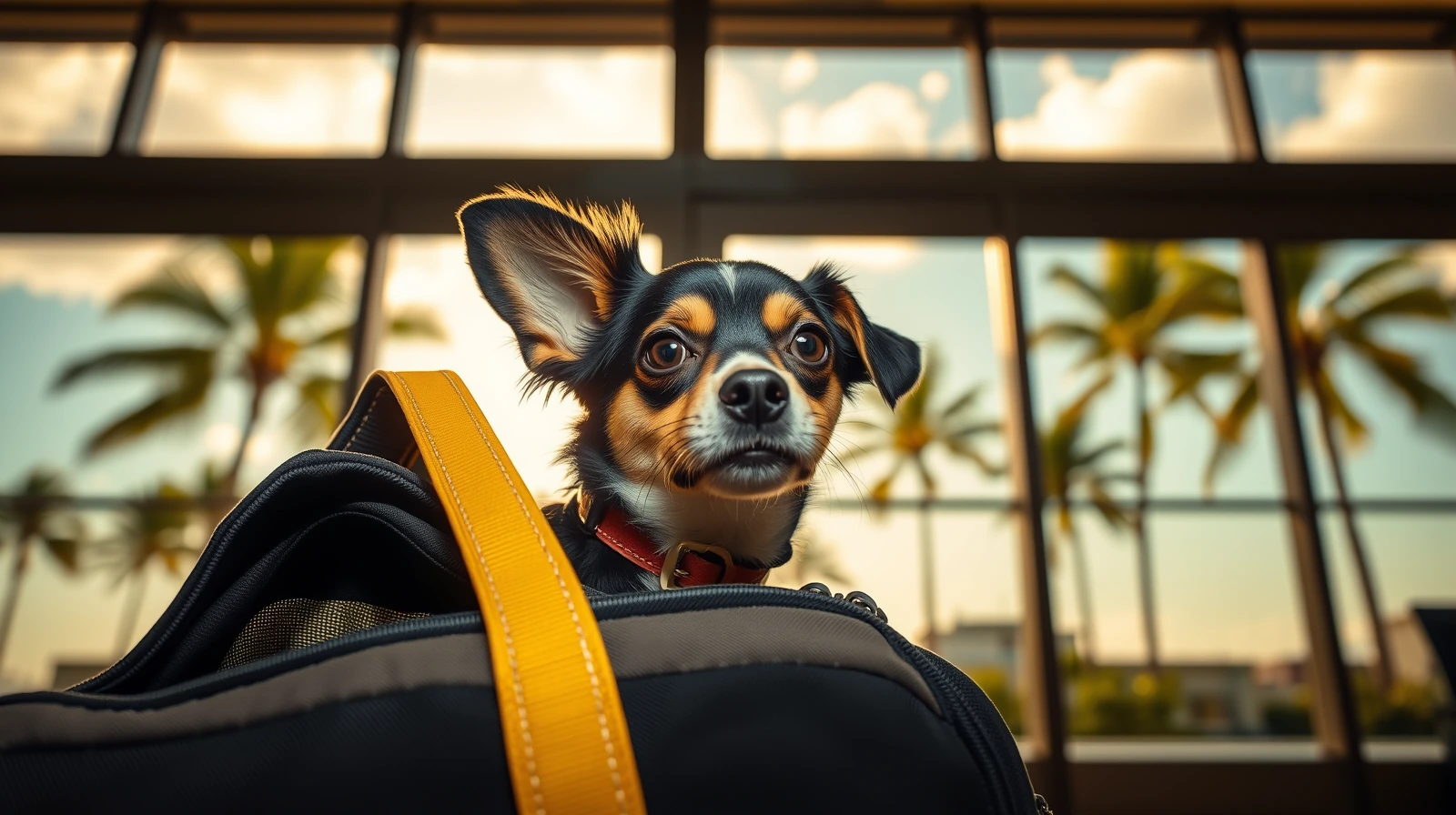
Hawaiian Airlines lets small dogs and cats fly in the cabin and accepts dogs, cats, and household birds as checked baggage. In-cabin runs about $35 each way interisland and around $100 transpacific for travel on or after Jan 2, 2026. Checked baggage is roughly $60 interisland and about $200 mainland. Confirm current figures before booking.
Hawaiian Airlines lets small dogs and cats fly in the cabin and accepts dogs, cats, and household birds as checked baggage. As a rough guide, in-cabin pets cost about $35 each way interisland, while transpacific in-cabin flights to or from the US Mainland are around $100 each way for travel on or after January 2, 2026. Checked-baggage pets run roughly $60 interisland and about $200 mainland. Confirm current figures on Hawaiian's official site before booking.
For more on this, read KLM Pet Policy.
The short version: what Hawaiian Airlines allows
Hawaiian Airlines runs two pet programs that most travelers will use: pets in the cabin, and pets as checked baggage. The rules and fees split along two lines that matter for cost. The first split is the route: interisland flights between the Hawaiian islands are cheaper than transpacific flights between Hawaii and the US Mainland. The second split is the travel method: in the cabin under the seat, or checked in the cargo hold as accompanied baggage. For how Hawaiian compares to other carriers, see our pet airlines hub.
According to Hawaiian Airlines' published pet pages, small dogs and cats can travel in the cabin as long as the combined weight of the pet plus its carrier does not exceed roughly 25 lb, and the carrier fits under the seat in front of you. For checked baggage, the airline accepts dogs, cats, and household birds, with the combined pet-plus-kennel weight capped at about 70 lb. These figures are the airline's stated limits at the time of writing, and Hawaiian updates them periodically, so confirm the current weight caps and species rules directly on hawaiianairlines.com before you book.
One thing Hawaiian does not control is whether your pet is allowed into Hawaii at all. Hawaii is rabies-free and enforces some of the strictest animal-import rules in the United States. Those rules are set by the Hawaii Department of Agriculture, not the airline, and we cover them separately in our Hawaii pet transport guide. If you are flying a pet into Hawaii, read that first: the state requirements drive your timeline more than the airline booking does.
Hawaiian Airlines pet fees: the 2026 numbers
Hawaiian Airlines updated its pet pricing structure in late 2025. Per an October 14, 2025 update to its pet policy, an increased in-cabin fee applies to transpacific flights departing on or after January 2, 2026. The interisland fees are lower and have historically been more stable. Treat every number below as a planning estimate and verify the exact current fee in your booking flow, because airline pet fees change often and Hawaiian states its fees can be updated.
| Travel method | Interisland (each way) | Transpacific / Mainland (each way) |
|---|---|---|
| In-cabin (under seat) | About $35 | About $100 (flights on/after Jan 2, 2026) |
| Checked baggage (cargo hold) | About $60 | About $200 (updated from roughly $225 for flights on/after Jan 2, 2026) |
A few things to notice in that table. Fees are charged each way, per kennel, so a round-trip transpacific in-cabin trip could land near $200 in pet fees alone, and a round-trip checked-baggage move near $400. The interisland numbers are far gentler, which matches the reality that interisland hops are short and high-frequency. If you are weighing cabin against cargo more broadly, our breakdown of pet cargo vs in-cabin travel walks through the safety and cost tradeoffs that apply across most airlines, not just Hawaiian.
Why the transpacific in-cabin fee jumped
The roughly $100 each-way in-cabin fee for mainland flights is a meaningful increase over the prior structure. Hawaiian has not published a detailed rationale beyond noting the change in its October 2025 update, but the pattern tracks the broader US airline industry, where most carriers have raised pet fees over the past two years. For budgeting purposes, assume the higher figure and treat any lower number you see quoted in older articles as out of date.
In-cabin travel: rules and limits
In-cabin is the option most owners of small pets prefer, because the animal stays with you in a soft or hard carrier under the seat. Hawaiian's stated rules, which you should reconfirm at booking, include:
- Species: small dogs and cats only.
- Weight: the pet plus carrier combined should not exceed roughly 25 lb.
- Carrier fit: the carrier must fit fully under the seat in front of you, and your pet must be able to stand and turn around in it.
- Behavior: the pet stays in the carrier for the whole flight and must be calm and non-disruptive.
- Booking: in-cabin pet spots are limited per flight, so reserve early by phone or through the airline.
Carrier choice matters more than people expect. A carrier that is technically airline-approved but a hair too tall can get you turned away at the gate. We keep a buyer's guide to the best airline-approved dog carriers and a companion piece on how to choose a pet transport crate for the checked-baggage scenario. Measure your under-seat space against the carrier's outer dimensions, not the marketing copy.
Checked-baggage travel: rules and limits
When a pet is too big for the cabin, Hawaiian accepts it as checked baggage, meaning it travels in a climate-controlled section of the hold on the same flight as you. The airline's stated parameters, which again you should reconfirm, include:
- Species: dogs, cats, and household birds.
- Weight: the pet plus kennel combined should not exceed roughly 70 lb.
- Kennel: a rigid, ventilated, leak-proof travel crate that meets airline kennel standards, with secured door and food and water dishes.
- Temperature embargoes: airlines commonly restrict hold travel during extreme heat or cold, which can affect mainland routes seasonally.
Snub-nosed breeds deserve extra caution. Many airlines restrict or ban flat-faced dogs and cats from the hold because of their elevated risk of breathing problems at altitude. Hawaiian's specific breed list can change, so verify it directly, and read our explainer on the snub-nosed dog breeds flying ban if you own a bulldog, pug, Persian cat, or similar breed. The combined 70 lb cap also means large dogs simply cannot fly as checked baggage on Hawaiian, which pushes those owners toward ground transport or a dedicated pet shipper.
Interisland vs transpacific: which rules change
The biggest practical difference is cost, as the fee table shows. Interisland travel is cheaper and operationally simpler because you are not crossing into a new jurisdiction, you are moving within Hawaii. Transpacific travel to or from the Mainland carries higher fees and, critically, triggers Hawaii's animal-import rules on the inbound leg into the islands.
For interisland flights, the airline's pet program is the main hurdle: book the spot, meet the weight and carrier rules, pay the lower fee. For transpacific flights arriving in Hawaii, the airline booking is the easy part. The hard part is the state quarantine and rabies protocol, which we cover next and in full in our Hawaii pet transport guide.
Hawaii's animal-import rules are separate from the airline
This is the point that catches travelers off guard. Booking a pet seat on Hawaiian does not clear your pet to enter Hawaii. The state is rabies-free and runs a mandatory animal quarantine program administered by the Hawaii Department of Agriculture's Animal Quarantine Branch. The requirements cover microchipping, rabies vaccination history, a specific blood test, and timing windows, and getting any step out of order can mean a longer quarantine on arrival.
Hawaii does offer a "5 Day Or Less" program, and in some cases a same-day release at the airport, for pets that complete every prerequisite correctly and on schedule before travel. We will not restate the exact day counts and test windows here because they are detailed and subject to change. Get them straight from the source: the Hawaii Department of Agriculture Animal Quarantine page. Read it early, because some steps must happen weeks or months before your flight. Our Hawaii pet transport guide walks through how the airline booking and the state requirements fit together on one timeline.
The Alaska Air Group merger: what might change
Hawaiian Airlines is now part of Alaska Air Group following the companies' combination. Mergers of this size tend to align loyalty programs, baggage rules, and pet policies over time, though the carriers may continue operating under their own brands and rules for a while. If you also fly Alaska, do not assume the two pet programs are identical yet, and check both. We track Alaska's program in our Alaska Airlines pet transport guide. Because policy alignment is ongoing, the single most reliable move is to verify the current pet rules on the operating carrier's official site for your specific flight before you book.
Who Hawaiian Airlines pet travel suits
Hawaiian's pet program is a strong fit for some travelers and a poor fit for others. Use this quick decision logic:
- Great fit: owners of small dogs and cats under the combined 25 lb in-cabin limit, especially for interisland hops where the fee is low and the pet stays with you.
- Workable fit: owners of medium dogs and cats up to the combined 70 lb checked-baggage limit, who are comfortable with hold travel and not flying a snub-nosed breed.
- Poor fit: owners of large dogs over the 70 lb combined cap, snub-nosed breeds restricted from the hold, or anyone uneasy about cargo travel. These travelers should price a ground or specialist pet-shipping option instead.
If you are still deciding whether to fly your pet at all, our overview of how much pet transport costs compares airline travel against professional ground transport and dedicated pet shippers, which often make more sense for large dogs or owners who cannot accompany the animal.
Booking and day-of tips
Before you book
- Confirm the current fee, weight cap, and species rules on hawaiianairlines.com for your exact route and date.
- Reserve the pet spot early, since cabin and hold pet capacity per flight is limited.
- If arriving in Hawaii, start the state quarantine prerequisites first, because some steps run weeks ahead of travel.
- Check for seasonal temperature embargoes on mainland routes if traveling as checked baggage.
Day of travel
- Arrive earlier than usual, as pet check-in adds time at the counter.
- Exercise your pet beforehand and limit food close to departure, while keeping water available.
- Bring all paperwork in a folder: health certificate, vaccination records, and any Hawaii quarantine documents for inbound trips.
- Label the kennel with your name, contact number, and "Live Animal" markings, and attach a leak-proof water dish.
How we sourced this
The fees, weight limits, and species rules in this guide are drawn from Hawaiian Airlines' published pet pages for cabin and checked-baggage travel, including the airline's October 14, 2025 fee update effective for flights on or after January 2, 2026. Hawaii's animal-import and quarantine details come from the Hawaii Department of Agriculture's Animal Quarantine Branch. Because airline pet fees and state import requirements are revised periodically, every figure here is presented as an approximate planning estimate, and we direct you to confirm the current numbers and rules with the airline and the state authority before booking.
How much does it cost to fly a pet on Hawaiian Airlines?
What is the weight limit for pets on Hawaiian Airlines?
Can large dogs fly on Hawaiian Airlines?
Are snub-nosed breeds allowed on Hawaiian Airlines?
Does booking a pet on Hawaiian Airlines clear my pet to enter Hawaii?
How do I book a pet on a Hawaiian Airlines flight?
Will the Alaska Airlines merger change Hawaiian's pet rules?
Can pets fly interisland in Hawaii in the cabin?
Sources & references
- hawaiianairlines.com https://www.hawaiianairlines.com
- hdoa.hawaii.gov https://hdoa.hawaii.gov/ai/aqs/