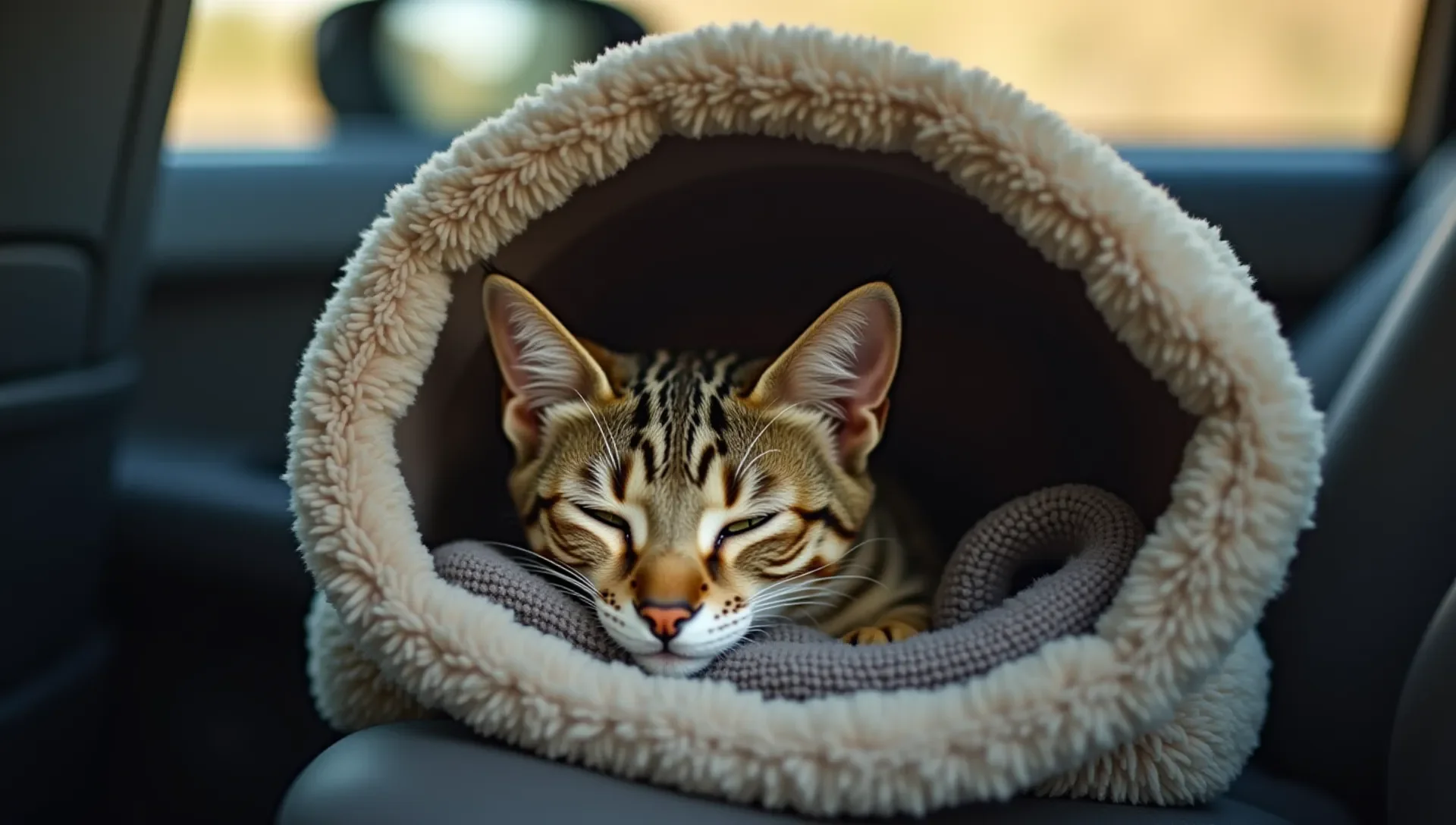
Long distance cat transport runs $400 to $1,800 by ground and $400 to $2,500 by air in 2026. For most cats, ground transport with a pet nanny or door-to-door operator is the better choice: lower stress, no cargo hold risk, and cats tolerate 4 to 6 hour driving stretches well. Sedation is almost always the wrong call for cargo flights.
Ground beats air for most cats
The cat-specific case for ground is strong. Cargo holds are pressurized but cold and loud. Cats are more prone to stress-induced gastrointestinal upset than dogs, and a vomiting or defecating cat in a cargo crate for 4+ hours is a real welfare problem. Ground transport keeps the cat at human ambient temperature, allows litter access, and lets the driver assess the cat every few hours.
A 2,000-mile cross-country move:
| Option | Cost | Trip time | Cat welfare |
|---|---|---|---|
| Pet nanny ground (1 cat) | $1,200 to $1,800 | 3 to 4 days | High - regular stops, monitoring |
| Door-to-door ground operator | $1,400 to $2,200 | 3 to 5 days | High - similar protocol |
| Cargo flight (1 cat) | $400 to $900 | 5 to 12 hours | Medium - short but stressful |
| Owner drives own cat | $400 to $700 fuel + hotels | 3 to 5 days | Highest - cat with familiar human |
| In-cabin commercial flight | $125 to $200 each way | 5 to 10 hours | High - cat under seat with you |
In-cabin is by far the cheapest option if your cat fits the airline's under-seat dimensions in a soft carrier (most cats do; almost all carriers will fit a 12-lb cat). Most airlines allow 1 to 2 in-cabin pets per flight, so book early.
Driving a dog instead? Our how to transport a dog in a car guide ranks restraint options by crash-test data, covers motion sickness, and lists the states that ticket unrestrained pets.
Moving somewhere specific? See our guide to Pet Transport to the Philippines for that route's import requirements.
Moving somewhere specific? See our guide to Pet Transport to South Korea for that route's import requirements.
For a deeper look, see our guide to Can You Bring a Dog on a Cruise? The Honest Answer.
For a deeper dive, see our guide to pet transport to canada from the us in 2026: requirements, cost, and how-to.
Related reading: pet transport to dubai and the uae from the us: 2026 dog and cat import guide.
If you are weighing your options, our guide to dog car anxiety: how to calm your dog and stop carsickness goes further.
Planning a pet move? Read our guide on Pet Transport to Japan.
An international move raises different questions than a domestic one, covered in moving overseas with a cat.
Cats on a PCS need the same handling with added paperwork, covered in moving a cat on military orders.
The sedation question: almost always no
This is where bad advice circulates. The AVMA position is clear: tranquilizers should not be given to pets traveling by air because sedation increases the risk of cardiovascular and respiratory complications at altitude, and a sedated cat cannot reposition itself if it falls in the carrier.
For ground transport, sedation is also usually wrong. A mildly stressed cat can be calmed with:
- A Feliway-impregnated cloth in the carrier
- A familiar blanket or worn t-shirt
- Gabapentin (vet-prescribed, situational) for high-anxiety cats only - not a default
Gabapentin is the one exception many vets endorse for travel anxiety in cats. It is not sedation in the cargo-risk sense; it reduces anxiety without the cardiovascular suppression of acepromazine. Discuss with your vet 2+ weeks ahead so you can test the dose at home first.
Planning a pet move? Read our guide on Pet Transport to Singapore From the US.
Carrier selection: soft for cabin, hard for ground
For in-cabin flights, a Sherpa Original Deluxe or Sleepypod Air style soft carrier is the gold standard. They flex to fit under-seat dimensions (most airlines: 18" x 11" x 11" or similar) while giving the cat enough headroom. Cost $60 to $130.
For ground transport and cargo, a hard-sided IATA-compliant kennel (size 100 or 200 for most cats) is required. Look for:
- All-metal door latch (plastic clips fail in transit)
- Bolted seams (not snap-together)
- Ventilation on all four sides
- Floor with a non-absorbent liner
Cost $35 to $90 for a basic kennel, $120 to $200 for premium options like the Petmate Sky Kennel. Our deeper carrier guide lives in pet transport crate selection.
Multi-cat households: one carrier or two?
The default answer is two carriers, one cat each. Even bonded cats stress each other under travel pressure, and a single shared carrier creates fight risk and bathroom contamination.
Exception: kittens under 4 months from the same litter often do better shared, with extra ventilation and a bigger carrier (size 200). For adult cats, separate carriers every time.
Logistics with two cats:
- Two carriers fit in most pet nanny vehicles
- In-cabin most airlines allow 1 pet per passenger; two cats = two passengers or two in-cabin slots booked
- Cargo: each cat gets its own crate, each priced separately (no multi-pet discount typically)
Litter logistics that no one explains
A cat that holds its bladder for 12+ hours is at real risk for urinary issues. For ground transport over 4 hours, you need a plan.
The proven setup:
- A foldable disposable litter box (Hartz, IRIS, etc., $5 to $12 for a 3-pack) at every rest stop
- Puppy training pads as a contingency floor liner inside the carrier
- A small bag of your cat's regular litter (a cup at each stop is enough)
- Wet wipes and a backup blanket
Stops every 4 to 6 hours for offered bathroom time and water. Some cats will use the disposable box; others will simply hold it until home. Both are normal. The point is to offer the option.
For air cargo: a pad on the floor of the crate is allowed by IATA; a full litter box is not. Plan for the cat to potentially soil the crate and budget a thorough cleaning on arrival.
Cargo airline policies for cats
Cargo policies for cats are mostly identical to dogs but with lower weight thresholds and snub-breed considerations.
| Airline | Cat cargo status | In-cabin |
|---|---|---|
| American Airlines | Limited cargo (military/employee) | Yes, under-seat |
| United (PetSafe) | Yes, cargo and in-cabin | Yes |
| Delta | Embargoed (since 2016) | Yes, in-cabin only |
| Alaska | Cargo and in-cabin | Yes |
| Southwest | No cargo, in-cabin only | Yes |
| Lufthansa | Yes, premium cargo program | Yes |
| KLM | Yes | Yes |
Persian, Himalayan, Exotic Shorthair, and Burmese cats are brachycephalic and many airlines embargo them in cargo, just as with snub-nosed dogs. In-cabin or ground is the only safe option for these breeds.
Real 2026 cost scenarios
Scenario A: One 10-lb shorthair cat, LA to NYC, in-cabin commercial flight
Owner flies with the cat in a Sherpa carrier under the seat. $185 pet fee + owner's existing flight. Total cat-specific cost: $185 plus the carrier ($90 one-time). Trip time 6 hours.
Scenario B: Two cats, Chicago to Seattle, pet nanny ground
Pet nanny drives both cats in their own crates with stops every 4 hours over 3 days. Total: $1,650 (some operators discount second cat 25 to 30%).
Scenario C: One cat, Boston to Miami, cargo flight via PetSafe
United PetSafe cargo, hard kennel size 200, vet health certificate. Total: $720 cargo + $80 paperwork + $65 kennel = roughly $865. Trip time door-to-door about 12 hours.
Scenario D: One senior cat (14 yo) with kidney disease, San Diego to Portland
Pet nanny ground, with the operator administering subcutaneous fluids twice daily during the trip. Total: $1,800 to $2,400. Air is medically contraindicated.
For the senior-pet considerations, our pet transport for senior dogs guide covers most of the same logic for senior cats.
Three cat-friendly operators we recommend
Royal Paws Pet Transport
Boutique pet nanny model with strong cat experience. Two-pet pricing is reasonable, drivers carry cat-specific gear (Feliway, foldable boxes), and they will plan stops at quiet hotels. Quotes $1,400 to $2,100 for cross-country single cat. See our Royal Paws review for the full breakdown.
CitizenShipper-vetted ground transporters
CitizenShipper is a marketplace; the quality is in choosing the right transporter. Filter for those with 100+ completed trips and cat-specific reviews. Cost $400 to $1,200 ground, often half the price of door-to-door operators. The trade-off is that you are vetting the individual driver. Our deeper take is in the CitizenShipper Pet Transport review.
Happy Tails Travel
USDA-licensed cargo specialist with a strong cat track record. Useful when ground is impractical (e.g., relocating to Hawaii or international destinations). They book onto the right airlines (KLM, Lufthansa, Alaska) and handle paperwork. Cost $900 to $2,500 air.
What to pack for the trip
- 3 to 5 days of regular food in original packaging
- Familiar bedding or worn shirt
- Water from home in sealed containers (some cats refuse strange water)
- Vet records and rabies certificate (paper copies)
- Current medications in original prescription bottles
- Microchip number and recent photo
- Foldable disposable litter boxes plus a small bag of regular litter
Avoid: new toys, new food, anything that smells unfamiliar. The goal is to keep as much familiar context as possible during transit.