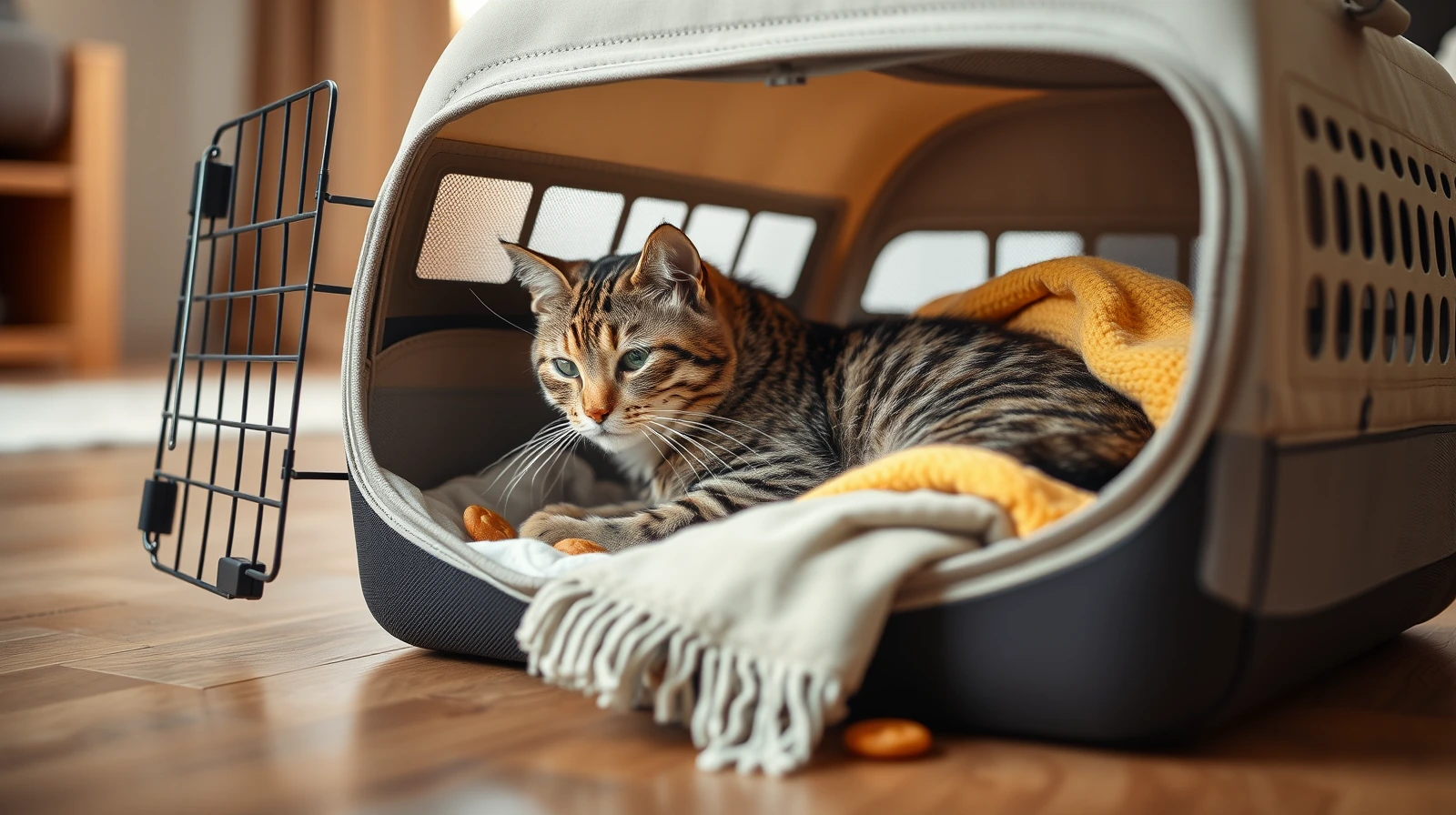
To prepare a cat for boarding, start four to six weeks out: get carrier acclimation going, book a pre-boarding vet check, gather familiar-smelling bedding and your cat's own food, and arrange a short trial visit. Keep the home routine steady, then drop off calmly. Expect a few quiet days of readjustment at home.
To prepare a cat for boarding, start four to six weeks out: get the carrier acclimation going, book a pre-boarding vet check, gather familiar-smelling bedding and your cat's own food, and arrange a short trial visit. Keep the home routine steady, then drop off calmly. Expect a few quiet days of readjustment when they come home.
Boarding is far less stressful for a cat that has been eased into it than for one bundled into a carrier on the morning of your flight. Cats are deeply territorial and routine-driven, so the change of place is the hard part, not the place itself. The good news: most of the work is small, low-effort steps spread over a few weeks, and the payoff is a cat that arrives calm and settles fast. This guide walks the prep and acclimation process step by step. It is the companion to our cat boarding requirements checklist, which covers the vaccines and documents the facility will demand. This page covers everything else: getting your cat ready emotionally and practically.
You may also want our guide to How to Introduce a Cat to a Dog.
Prepping for an in-home sitter is a little different from boarding. Here is how to prepare your cat for a pet sitter step by step.
Why preparation matters more for cats than dogs
Cats bond to territory, not just to people. A new environment removes every familiar scent marker at once, which is why feline stress at boarding shows up as hiding, crouched posture, lowered ears, reduced appetite, and over-grooming. International Cat Care notes that the cattery experience is most stressful when it is sudden and novel, and that familiarity (familiar smells, familiar food, a calm handover) does most of the work in keeping a cat settled.
There is also good evidence that the single most dreaded part of the trip, the carrier, can be defused with practice. A study in Applied Animal Behaviour Science, summarized in the 2022 AAFP/ISFM Cat Friendly guidelines, found that cats given positive-reinforcement carrier training over roughly six weeks were measurably calmer during car travel. That six-week window is exactly why this guide recommends starting four to six weeks before your trip rather than the night before.
If you are still deciding between a facility and an in-home option, weigh that first in our cat boarding vs cat sitting comparison, and use how to choose a cattery to vet the place. This article assumes you have booked and are now getting your cat ready.
The four to six week prep timeline
Here is the full runway at a glance. Adjust the start date to whenever you booked: even two weeks of carrier work beats none, but the longer lead time gives an anxious cat the easiest landing.
| When | What to do | Why it matters |
|---|---|---|
| 4-6 weeks before | Leave the carrier out as open furniture. Put a soft blanket and treats inside. Confirm vaccines are current (boosters need ~2 weeks to take effect). | Removes the carrier-equals-vet association; gives any needed vaccine time to be valid by drop-off day. |
| 3-4 weeks before | Feed a meal or treats near, then inside, the carrier. Book the pre-boarding vet check. Start a pheromone diffuser at home if your cat is anxious. | Builds a positive food link to the carrier; catches any health issue early. |
| 2 weeks before | Begin short carrier car rides (a few minutes, then home and a reward). Set aside an unwashed T-shirt or blanket that smells like you. | Generalizes calm from the carrier to the car; banks a familiar scent item. |
| 1 week before | Do a trial day visit to the facility if offered. Buy enough of your cat's regular food for the full stay plus a few extra days. Refill any medication. | A short trial lets the cat preview the place; same food prevents digestive upset. |
| 1-2 days before | Pack the boarding bag (checklist below). Keep the home routine completely normal. Do not bathe or over-handle the cat. | Stability is calming; cats read tension, so a normal week signals nothing is wrong. |
| Drop-off day | Feed a light meal, keep the handover short and matter-of-fact, hand over written care notes, and leave without a drawn-out goodbye. | A calm, brief drop-off avoids transferring your anxiety to the cat. |
Step 1: Acclimate the carrier (the biggest single win)
For most cats the carrier, not the cattery, is the worst moment of the whole trip. The fix is to stop storing it in the garage and bringing it out only for bad days. The AAFP/ISFM guidance is blunt about this: the carrier should become part of the cat's everyday environment, left open in a room the cat likes, ideally a model that opens from both the top and the front or has a removable top.
- Leave it out, door open. Put it in a quiet, favored spot with a soft, familiar blanket inside. Let the cat investigate on their own terms, with no pressure.
- Make it pay. Drop a few treats inside daily. Move feeding closer to it, then beside it, then just inside, over days, not minutes.
- Add your scent. Bed it with something that smells like you or like the cat's usual sleeping area.
- Then add motion. Once the cat rests in it willingly, do a couple of very short car rides that end at home with a reward, so the carrier stops predicting only bad outcomes.
Never force a cat in, and never rush the steps in a single afternoon. Fear Free and International Cat Care both stress that the cat sets the pace; pushing past a fearful cat undoes the progress. If your cat already tolerates the carrier well, you can compress this and spend the saved time on the trial visit instead. The same carrier discipline applies to any travel, including a longer move, which we cover in long-distance cat transport.
Step 2: Book a pre-boarding vet check
Schedule a vet visit three to four weeks out, not the week of your trip. Two reasons. First, most facilities require current core vaccines (typically rabies and FVRCP), and a booster needs roughly two weeks to confer protection, so a last-minute jab may not count and can leave the cat briefly off-color on drop-off day. Second, the visit is your chance to flag anything that affects the stay: a senior cat's kidney medication, a sensitive stomach, or early signs of illness you would rather catch before boarding than during it.
The Cornell Feline Health Center is a solid plain-English reference for what current vaccination and parasite control should look like for an indoor cat heading into a shared facility. Ask your vet to print or email a vaccination record you can hand over. For exactly which documents the facility will demand, see our cat boarding requirements guide; that is the paperwork side, and it does not overlap with the acclimation work here.
If your cat has a known anxiety history, this is also the visit to ask about a synthetic feline facial pheromone product or, in severe cases, a short-term anti-anxiety plan. The Merck Veterinary Manual notes that synthetic facial pheromone analogs can have a calming effect in stressful, caged environments and can help maintain food intake. Let your vet, not a label, decide what is appropriate.
Step 3: Pack familiar scent and their own food
The boarding bag is where you control the cat's sensory world inside the facility. Two things matter most: smell and food. A cat surrounded by home scents and eating its normal diet is a cat that keeps eating and settles faster. A sudden food switch on top of a strange room is the classic cause of boarding-stay diarrhea, which is why reputable catteries actively ask you to bring the cat's usual food.
- Their regular food, measured for the full stay plus three extra days in case your return slips. Include written feeding amounts and times.
- An unwashed item that smells of home: a worn T-shirt, a blanket from their sleeping spot, or a piece of bedding. Do not launder it first; the point is the scent.
- A familiar toy or two, and the cat's own brush or comb if grooming is part of their routine.
- Any medication, in its original packaging, with dosing instructions in writing.
- A written care sheet: feeding schedule, litter preferences, hiding habits, fears (vacuum, dogs), the name and number of your vet, and an emergency contact.
- Pheromone spray, if your vet recommended one, to refresh the bedding.
Most facilities provide litter, bowls, and a bed, and some prefer you not bring large items, so confirm their policy first. A label on every item with your cat's name avoids mix-ups. The same scent-and-food logic applies across pet care, which is why our dog-side guides, prepare a dog for boarding and what to pack for dog boarding, follow the same playbook even though dogs handle the change of place differently.
Step 4: Do a trial day visit
If the facility offers it, a short trial stay, even a single day or a long afternoon, is the highest-value thing you can do for a first-time boarder. International Cat Care specifically recommends a shorter trial for anxious cats before a longer booking. The cat gets to preview the smells, sounds, and handling without the full duration, and you get to see how the staff actually interacts with a nervous newcomer.
Watch for the things a good cattery does instinctively: letting the cat come out of the carrier on its own, keeping the carrier's secure bottom half available as a refuge, low voices, and no forced handling. If a trial day is not on offer, at least tour the cat-only area in person (covered in how to choose a cattery) and ask how they manage a cat that hides for the first 24 hours. The honest answer is "we leave it alone and let it acclimate," not "we coax it out."
Step 5: Keep the routine steady and drop off calm
In the final week, resist the urge to fuss. Cats read tension. Extra cuddling, a deep clean, suitcases out for days, and an emotional pre-trip goodbye all signal that something is wrong. Keep feeding times, play, and sleep spots normal. A pheromone diffuser running at home in these last weeks can help an anxious cat, but the bigger lever is simply not changing anything.
On drop-off day, feed a light meal so the cat is not traveling on a full stomach, keep the handover brief and businesslike, hand over your written care sheet, and leave without a long lingering goodbye. A calm, fast departure is genuinely kinder than a tearful one. The faster you hand over and go, the faster the staff can settle the cat into its space.
What to expect when your cat comes home
Readjustment is normal and usually short. Coming home is a second territory change, so do not be alarmed if your cat hides, re-explores the house cautiously, sleeps more, eats a little less, or seems aloof for a day or two. Industry summaries of feline boarding research suggest a majority of cats show some short-term behavior change after a stay, and that the large majority resettle within about a week. Treat those figures as directional rather than precise, and confirm anything concerning with your vet.
- Give them space, not a welcome party. Let the cat re-explore at its own pace; confining them to one familiar room first can help.
- Resume the normal routine immediately. Same food, same feeding times, same sleeping spots.
- Watch appetite and litter use. A day of reduced eating is common; persistent refusal to eat, ongoing diarrhea, lethargy, or signs of a urinary problem warrant a vet call.
- Do not over-fuss. Calm normalcy resettles a cat faster than anxious attention.
If your cat is still off after a week, or shows anything beyond mild aloofness, call your vet. Most cats are back to themselves within a few days, especially when the prep work above gave them a familiar-smelling, well-fed, low-drama stay in the first place.
How we sourced this
This guide draws on feline-welfare and behavior guidance from International Cat Care, the 2022 AAFP/ISFM Cat Friendly Veterinary Interaction Guidelines, the Cornell Feline Health Center, the Merck Veterinary Manual, and Fear Free. The carrier-training window reflects a positive-reinforcement study summarized in the AAFP/ISFM guidelines. Vaccine timing, pricing, and document requirements vary by facility and region, so confirm current specifics with your own vet and chosen cattery before you book.
How far in advance should I prepare my cat for boarding?
How do I get my cat used to the carrier?
Should I bring my cat's own food to the cattery?
What familiar items should I pack?
Is a trial day visit worth it?
How long does it take a cat to readjust after boarding?
Will my cat hate me for boarding them?
Do pheromone products actually help?
Sources & references
- icatcare.org https://icatcare.org/advice/catteries/starting-boarding-cattery
- catvets.com https://catvets.com/resource/aafp-isfm-cat-friendly-veterinary-interaction-guidelines/
- vet.cornell.edu https://www.vet.cornell.edu/departments-centers-and-institutes/cornell-feline-health-center
- fearfreehappyhomes.com https://fearfreehappyhomes.com/
- merckvetmanual.com https://www.merckvetmanual.com/behavior/behavior-of-cats/behavior-problems-of-cats