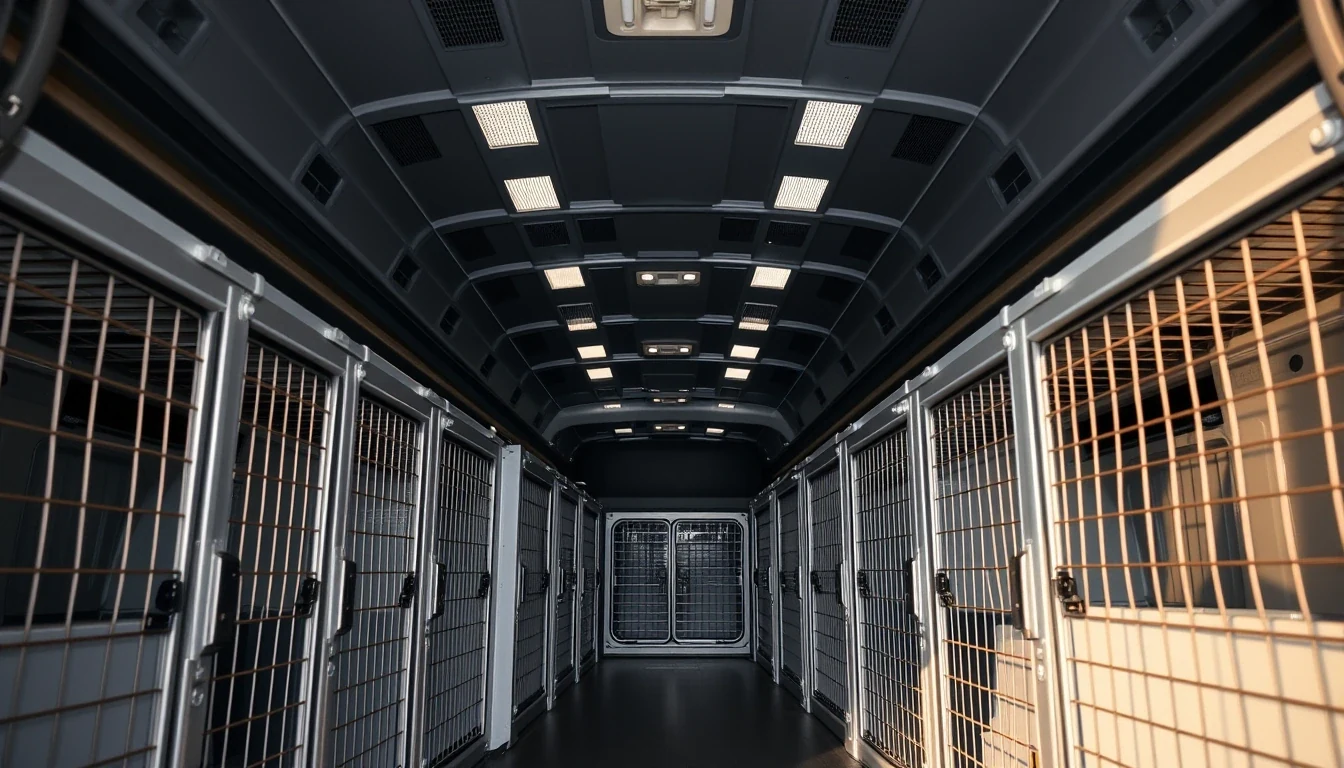
Ground pet transport ranges $190 (shared marketplace) to $2,500 (dedicated cross-country). Pricing built from base fee ($300-$600) plus per-mile ($0.50-$1.00 per mile). Best for: brachycephalic breeds banned from cargo, anxious pets that handle car travel better than flying, multi-pet households, routes outside major airline hubs. Major options: Shiply, uShip, CitizenShipper (marketplace, cheaper), TLC, Pet Express, Royal Paws, Blue Collar (dedicated integrated, consistent).
Pet transport by ground is a mode (vs air) that splits into two service models: marketplace shared ground (Shiply, uShip, CitizenShipper, $190-$600 cross-country) and dedicated integrated operators (TLC, Pet Express, Royal Paws, $1,300-$2,500). This guide covers the cost ranges, transit timing, vetting process, and when ground beats air for your specific pet and route.
Comparing ground to other modes by cost? See our how much does pet transport cost guide.
Ground is one of several routes: our guide to cross-country pet transport compares them side by side, and how to transport a pet covers the full picture.
Planning a bigger move? Our pet relocation hub covers routes, destinations, and every transport method.
For a deeper dive, see our guide to air animal pet movers review: is this premium pet shipper worth it? (2026).
Comparing providers? See our breakdown of Free Pet Transport.
Pricing tiers
| Tier | Distance | Typical cost | Transit | Best for |
|---|---|---|---|---|
| Local pet taxi | Under 50 mi | $40–$250 | Same day | Vet, grooming, daycare |
| Regional | 50–500 mi | $300–$700 | 1–2 days | State-to-state moves |
| Marketplace shared ground | Cross-country | $190–$600 | 4–7 days | Budget priority |
| Marketplace dedicated | Cross-country | $900–$1,800 | 3–5 days | Single-driver consistency |
| Integrated dedicated (TLC, Royal Paws) | Cross-country | $1,300–$2,500 | 3–5 days | Brachy, anxious, multi-pet |
| Specialty (luxury, medical) | Any | $2,500–$8,000 | Same day to 5 days | Critical or VIP transport |
How ground pricing is built
Ground pet transport pricing is typically: base fee + per-mile rate + add-ons.
- Base fee: $300-$600 covers operator overhead, vehicle wear, insurance, vehicle preparation.
- Per-mile rate: $0.20-$0.50 marketplace shared (consolidated routes); $0.50-$1.00 dedicated single-vehicle.
- Add-ons: rural pickup/delivery $150-$300; after-hours/weekend $100-$200; layover/overnight $150-$250 per night; multi-pet 50-75% of base per additional pet.
See our per-mile pricing breakdown for the detailed math across multiple route lengths.
Marketplace ground: cheapest paid option
Marketplaces consolidate driver routes, drivers post planned trips, you post yours, drivers bid. Because drivers consolidate multiple pets on the same route, pricing lands 30-60% below dedicated operators.
- Shiply: advertised starting $190; 7,172 reviews at 4.7 stars. Broad operator pool.
- uShip: bidding marketplace; 11,116 reviews at 4.4 stars. Strong driver verification.
- CitizenShipper: pet-specific with background-checked drivers. See our review.
Trade-off: timing variability (drivers run their own schedule). Pick drivers with 4.7+ stars and 50+ completed trips. Get bids 2-3 weeks before move date.
Dedicated integrated operators
Single integrated company handles pickup-to-delivery in their own vehicle with their own driver. Higher cost but consistent quality, predictable timing, professional handlers.
- TLC Pet Transport, ground specialist, national coverage
- Pet Express, integrated full-service, international capability
- Royal Paws, Southeast US strength
- Blue Collar Pet Transport, budget end of premium tier
- Arete Pet Transport, concierge premium
- WorldCare Pet Transport, international concierge
See our best pet transport companies 2026 round-up for the operator comparison table.
USDA Class T requirement
Any commercial ground transport across state lines requires USDA Class T registration under the Animal Welfare Act. Vehicle must comply with 9 CFR Part 3 standards: temperature controls (45F-85F ambient), ventilation, secure crate anchoring, food and water access, qualified handler training.
Verify before booking: search the APHIS public registry (aphis.usda.gov) for the operator's Class T number. Reputable operators publish it. See our USDA certified pet transport guide for the full verification process.
Transit process: what to expect
- Booking and scheduling: quote received within 24-48 hours. 50% deposit at booking; balance at delivery. Pickup window scheduled (typically 1-3 hours).
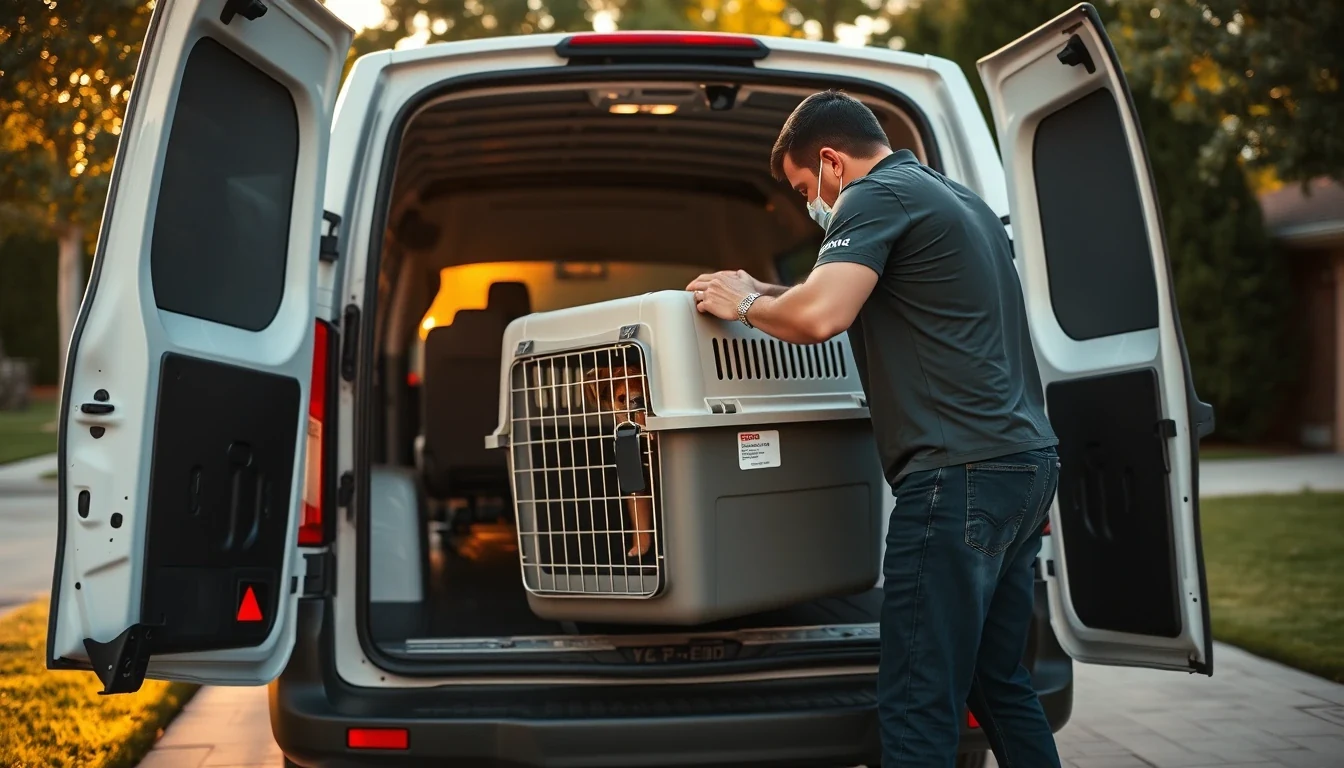
- Pickup: handler arrives at origin, inspects pet and documentation, signs transport agreement, photographs pet for trip record, loads pet into climate-controlled vehicle.
- Transit: bathroom breaks every 4-6 hours per 9 CFR Part 3. Daily check-in calls or photos. Multi-day trips include hotel overnight at handler's expense.
- Delivery: handler arrives at destination within scheduled window. Pet unloaded, documentation handed off, balance paid, delivery confirmation signed.
Hidden costs to budget for
- USDA-accredited vet certificate (CVI): $50-$200 per pet
- Rural pickup or delivery surcharge: $150-$300 if more than 50 miles off operator route
- After-hours, weekend, holiday pickup: $100-$200
- Layover/overnight stop: $150-$250 per night
- Multi-pet upcharge: 50-75% of base per additional pet
- Pet transport trip insurance (optional): $30-$150
A day on the road: what the timeline actually looks like
Ground transport is paced for animal welfare, not speed, and that pacing is the main thing owners underestimate. Reputable operators cap driving at roughly 10 hours per day, which works out to 400–550 miles of progress daily once stops and overnights are factored in.
| Route | Approx miles | Dedicated transit | Shared transit |
|---|---|---|---|
| Chicago to Denver | ~1,000 | 2–3 days | 3–5 days |
| Los Angeles to Dallas | ~1,400 | 3 days | 4–6 days |
| New York to Miami | ~1,300 | 2–3 days | 4–6 days |
| Seattle to Atlanta | ~2,600 | 5 days | 6–8 days |
A typical day runs: morning update with the day's itinerary, a pit stop and water break every 4–6 hours, a longer midday walk, and an overnight at a pet-friendly hotel at the handler's expense. Shared routes add days because the vehicle follows a fixed loop and picks up and drops other animals along the way. For how that transit time compares to flying, see our cheapest way to transport a pet breakdown.
Dedicated vs shared, decoded
The single biggest decision in ground transport is service model. The names vary by operator but the structure is consistent.
- Dedicated (private) transport. Your pet travels alone or with only your other animals, on your schedule, with one handler the whole way. Door to door, your timeline. Rates run roughly $1.00–$3.00 per mile. Best for anxious pets, medical cases, multi-pet households, and anyone who wants a fixed delivery date.
- Shared (consolidated) transport. Your pet rides a scheduled route alongside other clients' animals. Pickup is a window (often a 7-day Monday–Sunday band) rather than a date, and delivery runs 3–5 days for most routes. Rates run roughly $0.50–$1.00 per mile. Best for budget-priority moves with a calm, social pet.
Shared is 30–60% cheaper precisely because the cost of the trip is split across multiple animals. You trade schedule control and exclusivity for the savings.
How care en route actually works
What separates a professional operator from a cheap bid is what happens between pickup and delivery:
- Climate control. The vehicle holds an ambient range (commonly 45F–85F per federal standard) regardless of outside weather, with the pet never left in a parked vehicle in heat.
- Welfare stops every 4–6 hours for water, a bathroom break, and a leashed stretch.
- Daily check-ins by call, text, or photo so you can confirm your pet is eating and settled.
- Secured crating anchored so it cannot shift in a sudden stop, never a loose pet in a cargo area.
- Overnight rest in pet-friendly lodging on multi-day routes, with the handler staying with the animals.
Ask any operator to describe their stop schedule and overnight policy in writing. Vague answers are a red flag.
When ground genuinely beats air on cost, not just welfare
Ground is famous for being kinder to anxious and brachycephalic pets, but it also wins on price in specific situations:
- Large dogs. A 70–100 lb dog in air cargo can run well over $1,000 one way; dedicated ground often lands lower for the same route and avoids the cargo-hold risk entirely.
- Multi-pet moves. Air charges per animal with per-crate cargo fees; ground often charges a base plus a modest 50–75% upcharge per additional pet, so two or three pets ride far cheaper together.
- Routes outside airline hubs. Rural-to-rural moves with no direct cargo route force expensive connecting flights; a ground operator drives door to door.
- Brachycephalic breeds. Most US airlines exclude snub-nosed breeds from cargo year-round, so ground is not just cheaper, it is the only option.
For the per-mile math across route lengths, see our pet transport cost per mile guide.
How to vet a ground operator before you book
Beyond the USDA Class T check covered above, run this short screen:
- Confirm the Class T number on the APHIS public registry, do not just take the website's word.
- Get the certificate of insurance with per-animal limits in writing.
- Ask for the stop and overnight policy in writing.
- Read reviews that name specific drivers and routes, not generic five-star buckets.
- Confirm dedicated vs shared in the contract so the price and timeline match what you expect.
- Get the deposit and balance terms (commonly 50% at booking, balance at delivery) before paying.
The full operator comparison lives in our best pet transport companies 2026 round-up, and for single-leg moves see our door-to-door pet transport guide.
Frequently asked questions
How much does pet ground transport cost?
How long does ground pet transport take?
Is ground transport safer than air for pets?
Marketplace ground vs dedicated ground - which is better?
What is per-mile pricing for ground pet transport?
Do ground transport operators need USDA licenses?
Can ground transport handle brachycephalic breeds?
How do ground pet transport stops work?
How many miles a day does ground pet transport cover?
What is the difference between shared and dedicated ground transport?
Does my pet get bathroom and water breaks during ground transport?
Pricing tiers from marketplace bid patterns and operator rate cards (May 2026). USDA compliance per 9 CFR Part 3. We refresh quarterly.
Sources & references
- aphis.usda.gov https://www.aphis.usda.gov/aphis/ourfocus/animalwelfare
- ecfr.gov https://www.ecfr.gov/current/title-9/chapter-I/subchapter-A/part-3
- iata.org https://www.iata.org/lar
- shiply.com https://www.shiply.com/pet-transport
- citizenshipper.com https://www.citizenshipper.com