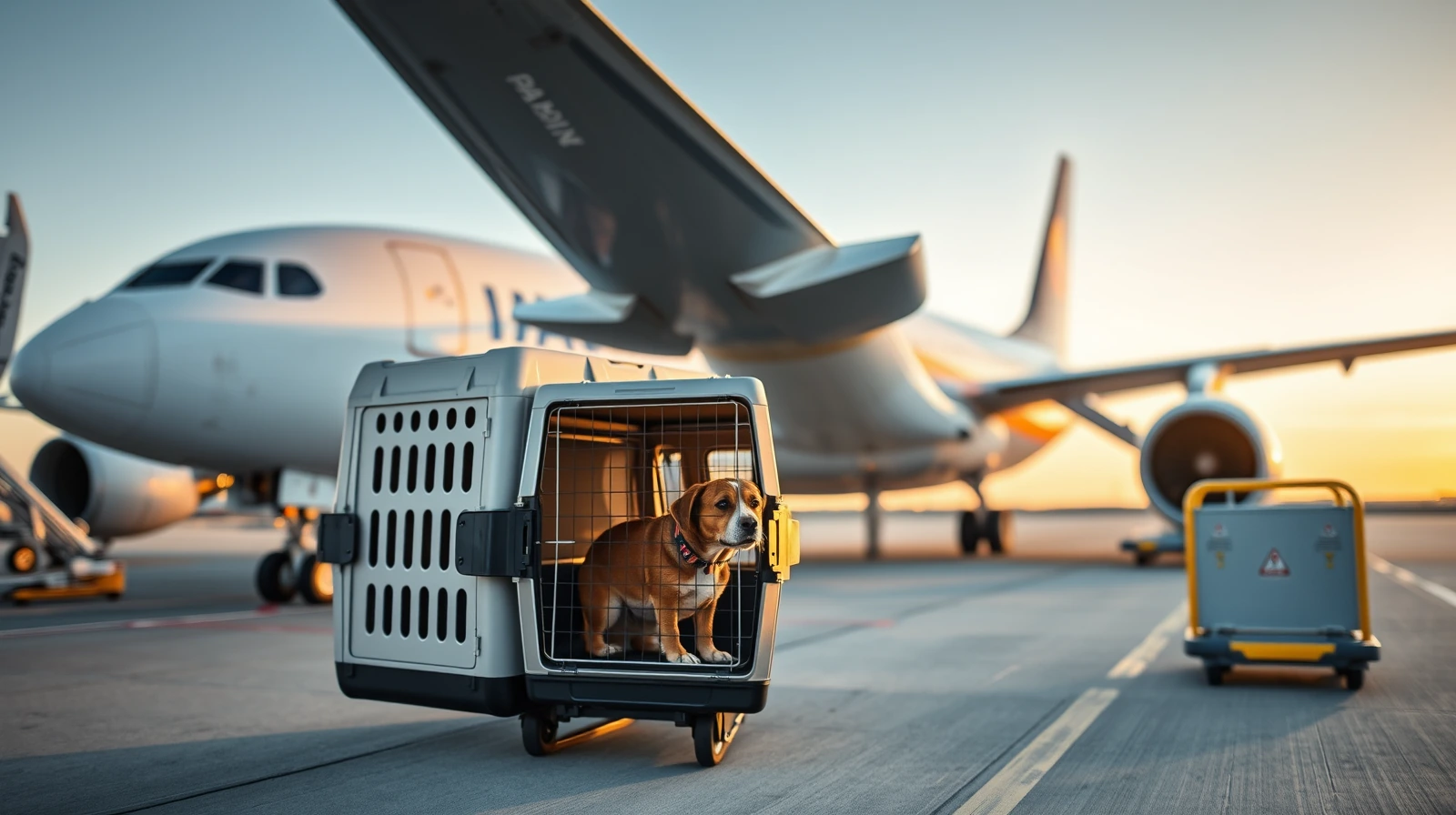
Qantas does not allow pets in the cabin except trained assistance dogs. Pets fly as cargo through Qantas Freight in an IATA-approved crate, on limited flights, so book the pet first. For US-to-Australia trips, Australia's biosecurity import rules are the bigger hurdle. Confirm everything on qantas.com.
If you are flying Qantas with a dog or cat, the first thing to understand is the one rule that surprises most US travelers: pets do not ride in the cabin. With the narrow exception of trained assistance dogs, every pet on Qantas travels as cargo through Qantas Freight, in a temperature and pressure controlled section of the hold. That changes how you book, what you spend on a crate, and how far ahead you need to plan. Here is a plain-English breakdown for US travelers, with the caveat that airline rules and Australia's import rules shift, so you should always confirm the current details on qantas.com or with Qantas Freight before you commit to anything.
Flying a different airline? See our guide to Delta Airlines Pet Policy in 2026.
No pets in the cabin (except assistance dogs)
Qantas does not allow pets to travel with passengers in the cabin on its flights. According to Qantas's own travelling-with-pets guidance, the only animals permitted in the cabin are professionally trained and accredited service or assistance dogs that meet the airline's specific approval process. That means there is no in-cabin option for a small dog or a cat the way some US carriers offer on domestic routes, and emotional support animals are not treated as assistance dogs under this policy. If your pet is not an accredited assistance dog, it travels as freight. Full stop.
This is a fundamentally different model from what many American flyers expect. If the difference between hold travel and cabin travel matters to you, it is worth reading our explainer on pet cargo versus in-cabin travel before you decide whether Qantas is the right airline for your trip, or whether a different routing makes more sense.
Flying a different airline? See our guide to Lufthansa Pet Policy.
Pets fly as Qantas Freight cargo
Because the cabin is off the table, your pet's booking runs through Qantas Freight rather than through your normal passenger reservation. Qantas Freight handles the animal as manifest cargo, loading it into a hold area that is temperature and pressure controlled, separate from luggage where possible. The practical upshot is that you are arranging two trips at once: your seat, and your pet's freight booking. They are not linked automatically, and the freight side has its own rules, timelines, and paperwork.
One critical scheduling point that catches people out: pets can only travel on certain flights, because not every aircraft and route is set up to carry live animals. For that reason Qantas Freight generally advises booking your pet's travel before you book your own ticket, so you can match your itinerary to a flight that actually accepts animals. Booking your seat first and assuming the pet can follow is the most common planning mistake. Confirm available pet-friendly flights with Qantas Freight first, then lock in your own seat around it.
Flying a different airline? See our guide to Turkish Airlines pet policy.
Key rules at a glance
The table below summarizes the headline rules as reported in Qantas and Qantas Freight guidance. Treat these as a starting point and approximate, not as guarantees: details vary by route, aircraft, breed, and the current published policy.
| Topic | What to expect |
|---|---|
| Cabin travel | Not permitted, except trained, accredited assistance dogs |
| How pets travel | As cargo via Qantas Freight, in a climate-controlled hold |
| Booking order | Book the pet first (limited flights carry animals), then your seat |
| Crate | IATA-approved, rigid, leak-proof, pet can stand, turn, lie down |
| Minimum age | Around 12 weeks old (confirm current minimum) |
| Older pets | Pets over roughly 12 years typically need a vet fit-to-fly certificate |
| Domestic vs international | Domestic Australian network is more straightforward; international is complex |
| Australia import (for US travelers) | Separate biosecurity rules: import permit, rabies titer, often quarantine |
Crate, age, and health requirements
Qantas requires pets to travel in an IATA-approved container. In practical terms that means a rigid, leak-proof crate with adequate ventilation, secure door fastenings, and enough room for the animal to stand up, turn around, and lie down in a natural position without its head or back touching the top. The IATA Live Animals Regulations are the global standard most airlines, including Qantas, build their crate rules around, so buying an IATA-compliant crate is the safest move. If you are new to this, our guide on how to choose a pet transport company covers how the pros size and outfit crates.
On age and health, the figures reported in Qantas Freight guidance are that puppies and kittens generally need to be at least about 12 weeks old to fly, and that pets older than roughly 12 years typically need a veterinary certificate confirming they are fit to fly. There are also weight and size checks: if the combined weight of the pet plus crate is large, Qantas may need to verify that the specific aircraft can accommodate it. These thresholds can change, so verify the current age, health-certificate, and size rules with Qantas Freight when you book. A travel health certificate is a separate document from the crate and the import paperwork; see our overview of the pet health certificate for travel to understand how the pieces fit together.
Snub-nosed and brachycephalic breeds
Snub-nosed (brachycephalic) breeds, including pugs, French and English bulldogs, boxers, and similar flat-faced dogs, and breeds like Persian cats, carry extra risk in air travel because their airways make them more prone to heat stress and breathing trouble. Airlines handle these breeds with extra caution, and reporting on Qantas's policy indicates snub-nosed pets may face stricter requirements, such as needing a larger crate than usual to improve airflow. Some carriers restrict or refuse these breeds outright on certain routes or in warm conditions. If you own a flat-faced breed, confirm directly with Qantas Freight whether your specific breed is accepted, on which routes, and under what crate rules. Our piece on the snub-nosed dog breeds flying ban explains why these restrictions exist and how to plan around them.
Domestic Australia vs international travel
There is a big gap in complexity between moving a pet within Australia on Qantas's domestic network and flying a pet internationally. Domestic pet travel is comparatively straightforward: book through Qantas Freight, use a compliant crate, meet the age and health rules, and drop off and collect at the freight terminal. There is no customs or quarantine layer for a purely domestic Australian move.
International travel is a different animal. Qantas Freight strongly recommends using a professional pet travel specialist for international moves, precisely because the airline booking is only one part of a much larger process that includes export rules from the origin country, customs, and the destination country's import and quarantine requirements. For US travelers, those destination rules are where the real work lives, which brings us to the single most important point in this guide.
The big caveat for US travelers: Australia's import rules
If you are flying a pet from the United States to Australia, the airline policy is not your main constraint. Australia has some of the strictest biosecurity import rules in the world, and they are separate from, and far bigger than, anything Qantas requires. These rules are set and enforced by the Australian Government's Department of Agriculture, Fisheries and Forestry, not by the airline. You can have a perfect Qantas Freight booking and still be unable to bring your pet in if the import side is not handled correctly.
According to the Australian Government's guidance on bringing cats and dogs to Australia, the process typically involves a valid biosecurity import permit, microchipping, a rabies vaccination and a rabies neutralizing antibody titer (RNATT) blood test, and a mandatory stay at the government post-entry quarantine facility at Mickleham, near Melbourne. The minimum quarantine reported is around 10 days, but it can run longer depending on the country group and whether every step was done in the correct order. The lead times are long: the import process commonly takes many months from start to finish because of the testing windows and waiting periods. Start early, and do not book travel until you understand the full timeline.
On the US side, the USDA APHIS Pet Travel service handles the export health certification and endorsement you will need before your pet leaves the country. Because the requirements are detailed, deadline-driven, and consequential if you get them wrong, this is exactly the kind of move where most families use a specialist. We cover the destination-specific steps in depth in our pet transport to Australia guide. Use that for the import timeline, and use Qantas Freight for the flight, but verify both against the official sources because the rules change.
How to plan a Qantas pet trip
- Decide first whether your trip is domestic within Australia or international, because the process differs enormously.
- Contact Qantas Freight early to find flights that accept pets, and book the pet before your own seat.
- Buy an IATA-approved crate and confirm sizing, especially for snub-nosed breeds that may need a larger crate.
- Line up vet paperwork: the fit-to-fly certificate for older pets, plus any health certificate the route requires.
- For US-to-Australia moves, begin the Australian import permit, microchip, rabies vaccine, and titer test months ahead, and book a Mickleham quarantine slot.
- Confirm every figure and rule on qantas.com, with Qantas Freight, and on the official government sites before you pay.
The bottom line: Qantas treats pets as cargo, not carry-on, and for international trips the airline booking is the easy part. The numbers and rules in this article are approximate and reported from current guidance, so treat them as a planning framework rather than a guarantee, and always confirm the live details before you commit.
Frequently asked questions
Can my pet fly in the cabin on Qantas?
How do pets travel on Qantas if not in the cabin?
Should I book my pet or my own ticket first?
What kind of crate does Qantas require?
Is there a minimum age for pets to fly Qantas?
Are snub-nosed or flat-faced breeds allowed?
What do I need to bring a pet from the US to Australia?
How long does the Australian import process take?
Sources & references
- qantas.com https://www.qantas.com/us/en/travel-info/specific-needs/travelling-with-pets.html
- aphis.usda.gov https://www.aphis.usda.gov/pet-travel
- agriculture.gov.au https://www.agriculture.gov.au/biosecurity-trade/cats-dogs
- iata.org https://www.iata.org/en/programs/cargo/live-animals/pets/