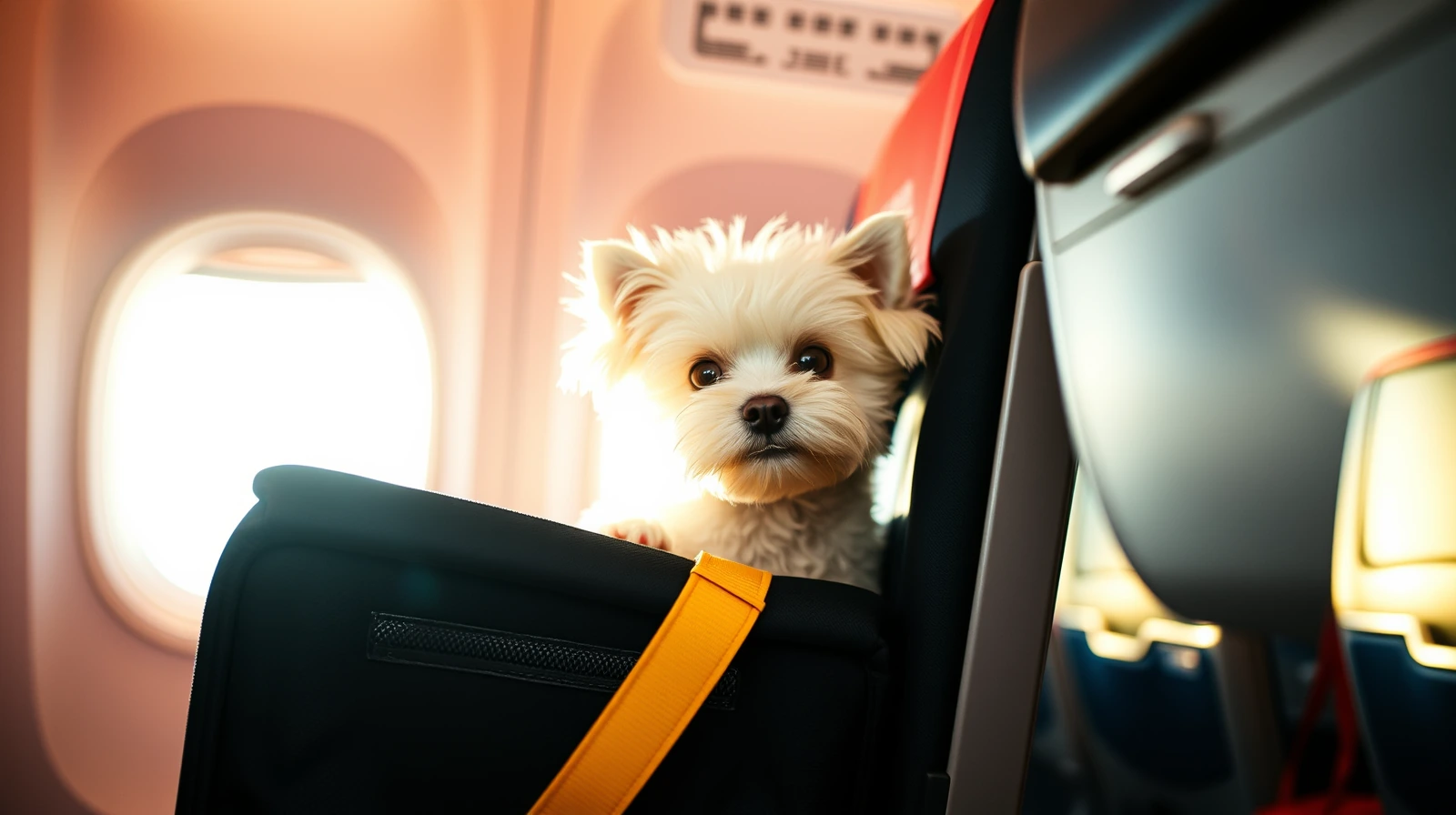
Turkish Airlines lets small dogs, cats, and small birds fly in the cabin if pet plus carrier weighs no more than about 8 kg (17 lb), with cabin fees from roughly $0-15 domestic to about $100-150 intercontinental. Larger pets travel as cargo. Dogs and cats cannot share a plane. Confirm before booking.
Turkish Airlines lets small dogs, cats, and small birds fly in the cabin if the pet plus carrier weighs no more than about 8 kg (17 lb), with cabin fees that range from roughly $0-15 on domestic Turkish routes to about $100-150 on intercontinental flights. Larger pets travel as checked cargo (AVIH). One quirk: dogs and cats are not allowed on the same plane. Confirm all figures with Turkish Airlines before booking.
Among the major international carriers, Turkish Airlines is relatively pet-friendly for in-cabin travel: it accepts dogs, cats, and small caged birds in the cabin, runs a vast network out of Istanbul, and prices the cabin fee lower than several US legacy carriers. But the policy carries some unusual restrictions that catch owners off guard, including a rule that dogs and cats cannot share the same aircraft and a list of banned dog breeds. This guide decodes the in-cabin rules, the cargo (AVIH) tiers, the fee ranges by region, and the booking steps, all drawn from Turkish Airlines' published pet pages, and it sits within our wider guide to flying pets by airline. Because airline policies and fees change without much notice, treat every figure here as a starting point and confirm the current details directly with Turkish Airlines before you book.
For more on this, read Qantas Pet Policy.
For a deeper look, see our guide to Flying With a Dog in Cabin.
In-cabin pets: who qualifies and the weight limit
According to Turkish Airlines' traveling-with-pets page, the airline accepts three categories of animal in the cabin: dogs, cats, and small caged birds such as budgerigars (budgies) and canaries. The hard gate is weight. The combined weight of the pet and its carrier must not exceed roughly 8 kg (about 17 lb). If the pet-plus-carrier figure goes over that line, the animal cannot ride in the cabin and must travel as checked baggage or cargo instead.
The carrier itself also has size and design rules. Turkish Airlines specifies a maximum carrier of roughly 40 x 30 x 23 cm for cabin travel, and the carrier must be leak-proof and escape-proof so the animal stays contained for the whole flight. A passenger may bring up to two carriers, but only one of them can be carried in the cabin; the second has to travel in the hold. Your pet has to stay inside the carrier, under the seat in front of you, for the duration of the flight. These dimensions and allowances can vary by aircraft and route, so confirm the current limits with Turkish Airlines before booking.
If you are weighing cabin against hold for your specific pet, our breakdown of pet cargo vs in-cabin travel walks through the safety, cost, and stress trade-offs in detail. As a rule, in-cabin is the lower-stress option whenever your pet is small enough to qualify.
Cabin vs cargo at a glance
The single biggest decision is whether your pet rides in the cabin with you or as checked cargo in the hold. The table below compares the two on the points that matter most. Figures are indicative ranges drawn from Turkish Airlines' published policy and should be confirmed with the airline before booking.
| Factor | In-cabin | Cargo (AVIH, animal in hold) |
|---|---|---|
| Eligible animals | Dogs, cats, small birds (budgies, canaries) | Dogs and cats; larger animals by weight tier |
| Weight limit | Pet plus carrier up to ~8 kg (17 lb) | Tiered: light 0-23 kg, medium 24-32 kg, heavy 33 kg+ |
| Carrier | Soft or hard, max ~40 x 30 x 23 cm, under-seat | IATA-compliant rigid crate sized to the animal |
| Where pet travels | With you, under the seat in front | Climate-controlled hold or as cargo |
| Indicative fee | ~$0-15 domestic, ~EUR 70-100 Europe, ~$100-150 intercontinental | Higher; priced by weight tier and route, confirm with airline |
| Best for | Small dogs, cats, caged birds | Larger dogs, multiple animals, or pets over the cabin limit |
Turkish Airlines pet fees by region
Turkish Airlines prices its in-cabin pet fee by route geography rather than a single flat rate, and its cabin fees are relatively low compared with several US legacy carriers. The ranges below are indicative; the airline publishes current amounts on its pet travel and fees pages, and you should confirm the exact figure for your itinerary before booking because pet fees change often.
| Route type | Indicative cabin fee (one way) | Notes |
|---|---|---|
| Domestic Turkey | Roughly $0-15 | Lowest tier; short hops within Turkey |
| European routes | Roughly EUR 70-100 (about $75-110) | Charged per direction, per carrier |
| Intercontinental / US routes | Roughly $100-150 | Still lower than several US carriers' cabin fees |
| Cargo (AVIH) | Priced by weight tier and route | Confirm directly with Turkish Airlines cargo |
Fees are typically charged per direction and per carrier, so a round trip with one pet means paying the fee twice. If you are budgeting a longer move and comparing carriers, our wider look at pet relocation costs and logistics puts these airline fees in context against ground transport and full-service relocation.
The dogs-and-cats-not-on-the-same-plane quirk
This is the rule that surprises most travelers. Turkish Airlines does not allow dogs and cats to travel on the same aircraft, and it likewise does not pair cats and birds on the same flight. The reasoning is welfare and stress reduction for the animals, but in practice it means availability is limited: if a dog is already booked on your flight, your cat may be turned away, and vice versa.
The practical takeaway is simple. Book your pet's spot as early as possible and confirm the booking directly with Turkish Airlines rather than assuming a seat is available. Pet spaces in the cabin are also capped per flight, so two separate constraints (the species rule and the per-flight cabin cap) can both bite. Phone confirmation is worth the time here, because a same-day surprise at the airport is the worst place to discover the plane already has the "wrong" species aboard. Always confirm current rules and availability with the airline before booking.
Brachycephalic breeds and the cargo ban
Flat-faced (brachycephalic) animals are more vulnerable to heat stress and breathing difficulty, and most airlines restrict them. Turkish Airlines applies this to cats specifically: according to its published policy, brachycephalic cat breeds may travel in the cabin but are barred from the cargo hold (a restriction the airline introduced in October 2021) on welfare grounds. The breeds named include Persian, Himalayan, Exotic Shorthair, British Shorthair, Scottish Fold, Burmese, and Birman.
If you own one of these cats and it exceeds the cabin weight limit, you are effectively out of options for that animal on Turkish Airlines and should plan an alternative route or carrier. The same heat-and-breathing logic applies broadly to snub-nosed dogs across the industry; our guide to snub-nosed dog breeds and flying bans covers which dog breeds face restrictions and why. Confirm the current brachycephalic list and any seasonal embargoes with Turkish Airlines before booking.
Banned dog breeds
Separate from the brachycephalic cargo rule, Turkish Airlines publishes a list of dog breeds it does not accept at all, neither in the cabin nor in the hold. Stated neutrally, the banned and restricted breeds include the following, and the list extends to crossbreeds of these dogs:
- American Bulldog
- Tosa Inu
- Caucasian Ovcharka (Caucasian Shepherd)
- Dogue de Bordeaux
- Doberman
- Presa Canario
- Rottweiler
- Mastiff (except Bull Mastiff)
- Wolf-dog hybrids and mixes
- Anatolian Shepherd
- Boerboel
- Crossbreeds of the above
If your dog is on or near this list, contact Turkish Airlines before making any plans, because acceptance can depend on documentation and the airline's own assessment. Breed lists are updated periodically, so confirm the current restricted-breed list directly with the airline before booking.
Cargo (AVIH) weight tiers
When a pet is too large or too heavy for the cabin, it travels as AVIH, the industry code for an animal carried in the hold. Turkish Airlines classes hold animals by weight, which drives the crate requirements and the fee:
- Light: 0-23 kg (pet plus crate)
- Medium: 24-32 kg
- Heavy: 33 kg and above
For hold travel the crate must be a rigid, IATA-compliant container sized so the animal can stand, turn around, and lie down naturally. Choosing the right crate is the single most important safety decision for cargo travel; see our guides to how to choose a pet transport crate and, for cabin trips, the best airline-approved dog carriers. Cargo pricing and crate specifications vary by route and animal, so confirm both with Turkish Airlines cargo before booking.
How to book a pet on Turkish Airlines
Pet space cannot be added through the standard online checkout the way a seat or bag often can. The process runs through the airline directly. The general steps are below; confirm the exact current procedure with Turkish Airlines.
- Check eligibility first: confirm your pet's species is accepted, that the breed is not on the banned list, and that pet plus carrier meets the cabin weight and size limits (or fits a cargo weight tier).
- Contact Turkish Airlines as early as possible, ideally well before your travel date, because cabin pet spots are capped per flight and the dogs-or-cats-not-both rule limits availability.
- Request the pet reservation and have your flight details ready. The agent confirms whether a slot is available on your specific aircraft.
- Prepare documents: a valid health certificate from a licensed veterinarian, up-to-date rabies vaccination, and any destination-specific paperwork. Requirements depend on where you are flying.
- Pay the pet fee, which is charged per direction and per carrier, at the airport or as instructed by the airline.
- Reconfirm a day or two before departure, and arrive early on travel day with the pet, the carrier, and all paperwork in hand.
Entry rules: the part the airline does not handle
Booking a pet on the plane is only half the job. The destination country sets its own import rules, and those are separate from anything Turkish Airlines controls. For travel into the European Union, animals generally need a microchip, a valid rabies vaccination, and an EU pet passport or an official health certificate, with additional requirements for some countries. For travel into Turkey, similar microchip, vaccination, and health-certificate rules apply. For US imports, the CDC's dog import rules and USDA APHIS pet travel requirements govern entry, and these have tightened in recent years.
The European Commission's rules on movement of pets and the relevant destination government authority are the definitive sources. Because import requirements change and timelines for paperwork can run weeks, start this early and confirm current requirements directly with the destination's government veterinary authority, the CDC, or USDA APHIS before you travel. Our broader pet relocation guide walks through the document timeline for international moves.
Who Turkish Airlines suits, and who should look elsewhere
Turkish Airlines is a strong choice for owners of small dogs, cats, and caged birds that fit the roughly 8 kg cabin limit, especially given its lower-than-average cabin fee and its enormous route network through Istanbul. The in-cabin acceptance of small birds is also unusual and welcome for that subset of owners.
It suits you less well if you own a large dog (cargo only, with the species-pairing and breed rules still in play), a banned breed, or a brachycephalic cat that exceeds the cabin limit and therefore cannot use the hold. If your situation runs into those limits, compare alternatives. Our review of Lufthansa's pet transport policy covers another major European carrier with a different rule set, and for cats specifically, flying with a cat in the cabin details what to expect on the day. As always, confirm the current policy with each airline before booking.
How we sourced this
The policy details here are drawn from Turkish Airlines' published traveling-with-pets and pet-fee pages, with import rules cross-checked against the CDC, USDA APHIS, and the European Commission's pet-movement guidance. Fees are presented as indicative ranges because airlines change them frequently and price by route. We have hedged figures and flagged where you must verify, but airline policy and country import rules can change between our research and your travel date. Always confirm the current weight limits, fees, breed rules, and entry requirements directly with Turkish Airlines and the destination's government veterinary authority before booking.
What is the in-cabin weight limit for pets on Turkish Airlines?
How much does it cost to fly a pet on Turkish Airlines?
Can dogs and cats fly together on the same Turkish Airlines plane?
Can my cat or dog ride in the cabin on Turkish Airlines?
Which dog breeds are banned on Turkish Airlines?
Can brachycephalic (flat-faced) cats fly on Turkish Airlines?
How do I book a pet on a Turkish Airlines flight?
What documents does my pet need to enter the EU, Turkey, or the US?
Sources & references
- turkishairlines.com https://www.turkishairlines.com/en-us/any-questions/traveling-with-pets/
- cdc.gov https://www.cdc.gov/importation/dogs/index.html
- aphis.usda.gov https://www.aphis.usda.gov/pet-travel
- ec.europa.eu https://ec.europa.eu/food/animals/movement-pets_en