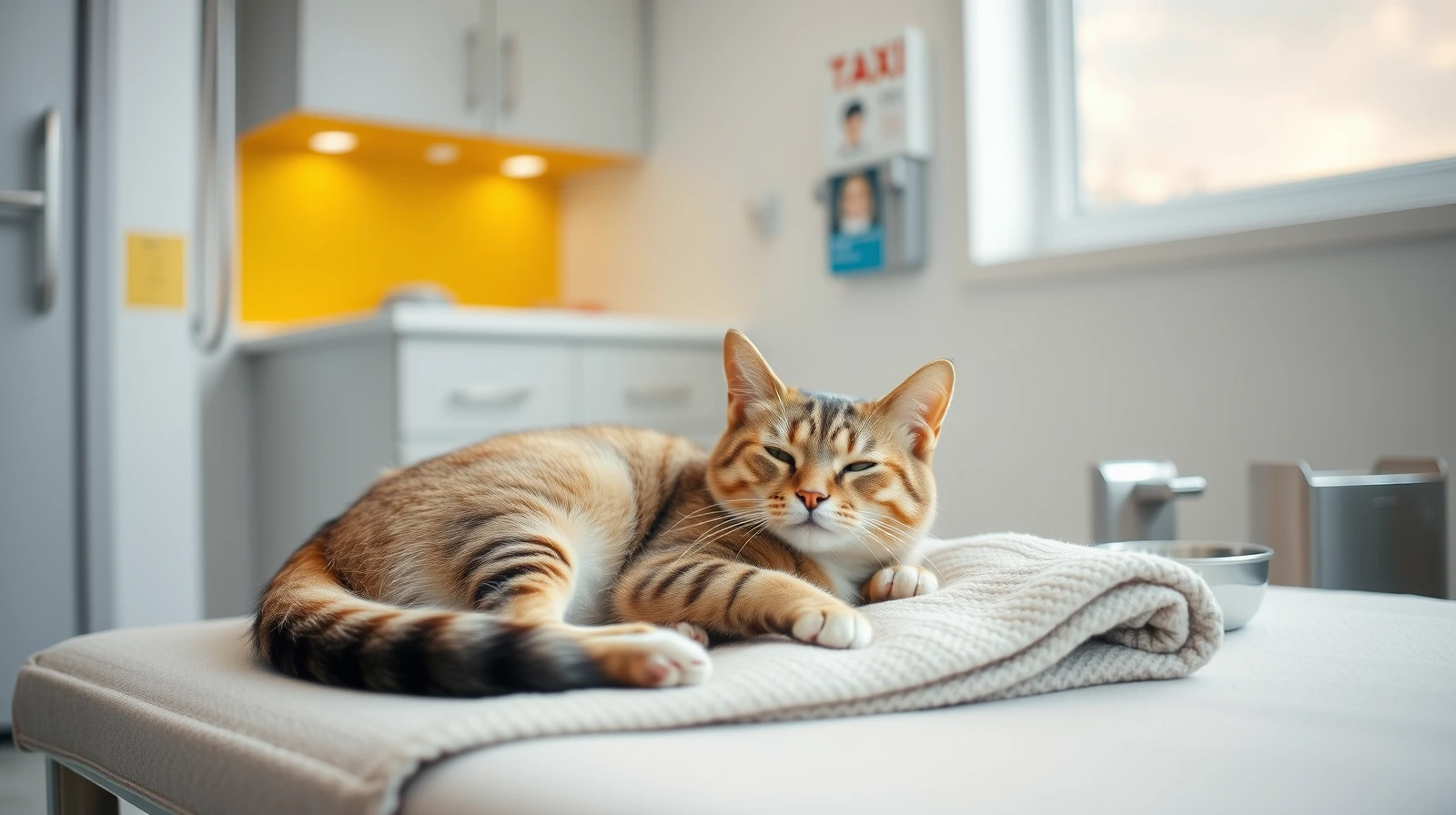
For many senior or special-needs cats, in-home sitting beats boarding; Cornell says older cats are less adaptable to change. If you board, pick a vet-attached facility for cats on medication, bring all drugs plus medical records, and agree an emergency plan in writing first.
For many senior or special-needs cats, in-home pet sitting beats boarding, and the Cornell Feline Health Center says so directly: older cats are "usually less adaptable to change," so a sitter who keeps your cat in its own home is often the calmer choice. If you do board, choose a vet-attached facility for cats on medication, bring every drug plus medical records, and agree an emergency plan in writing first.
See also Moving With a Cat.
Older cats often cope better in their own home, which is where overnight cat sitting can be a gentler option than a facility.
For cat owners: our guide to Best Calming Aids for Cats.
Before you board an older cat, it helps to understand day-to-day senior cat care and what changes with age.
When is a cat "senior," and why does it change the boarding math?
The Cornell Feline Health Center notes that cats "begin to encounter age-related physical changes between seven and ten years of age, and most do so by the time they are 12." The 2021 AAFP Senior Care Guidelines and the AAFP/AAHA feline life-stage framework generally treat cats as "mature" around 7 to 10, "senior" from roughly 11, and the oldest cats as geriatric. Chronological age matters less than what is going on inside: a sleek, healthy 13-year-old is a different boarding candidate than a 9-year-old with kidney disease.
The reason boarding gets harder with age is twofold. First, senior cats tolerate environmental change poorly. International Cat Care points out that older cats "don't cope particularly well with changes to their routine," and a strange room full of unfamiliar smells and other cats is a large change. Second, the conditions that show up with age, chronic kidney disease (CKD), diabetes mellitus, hyperthyroidism, hypertension, arthritis, need ongoing management that a standard kennel is not set up to provide. dvm360's coverage of senior-cat comorbidities stresses that these cats often carry two or three diagnoses at once, each with its own monitoring needs.
So the question is not just "where will my cat sleep" but "who can read my cat, dose its medication on time, and act fast if something changes." That reframes the whole decision. For more on the baseline paperwork any facility expects, see our guide to cat boarding requirements.
For cat owners: our guide to How Many Litter Boxes Per Cat.
Board or stay home? An honest decision table for senior cats
There is no single right answer, and you should be wary of anyone who gives you one. The most authoritative feline source on this, Cornell, leans toward keeping older cats home: "a better alternative is to have the older cat cared for at home by a neighbor, friend, or relative." International Cat Care echoes that a cat who has always boarded happily can keep doing so, but "there may come a time when they prefer to stay at home with someone visiting or staying over." Use the table below as a starting framework, then weigh it against your specific cat.
| Situation | Often better: in-home sitting | Often better: boarding (ideally vet-attached) |
|---|---|---|
| Cat is stable, no meds, used to a cattery | Optional | Reasonable choice |
| Cat is anxious or stressed by change | Strongly favored | Last resort |
| Insulin or twice-daily timed meds | Good if sitter can dose reliably | Good if facility is vet-attached |
| Brittle diabetes or hypoglycemia risk | Only if sitter is highly skilled | Vet-attached strongly favored |
| Advanced CKD needing subcutaneous fluids | Skilled sitter or vet tech | Vet-attached or in-clinic boarding |
| Frail, mobility-limited, or end-of-life | Strongly favored (minimize moves) | Avoid unless medically necessary |
| Owner away 2 to 3 weeks | Workable with daily visits or live-in | Workable if cat copes well |
If you land on in-home care, the trade-offs between options are worth thinking through carefully, our breakdown of cat boarding vs cat sitting walks through cost, supervision, and stress for each. If you have both a dog and a cat, you may find the calculus differs by species; our companion piece on senior dog care, sitting vs boarding covers the canine side of the same decision.
When vet-attached boarding is the right call
"Vet-attached" boarding means the boarding area is run by, or physically connected to, a veterinary practice, so a vet or licensed technician is on-site or minutes away. For a healthy cat this is overkill. For a special-needs cat it can be the difference between a routine stay and an emergency you were not there for. Lean toward vet-attached boarding when your cat:
- Needs injectable insulin. Diabetic cats require insulin on a tight schedule, usually every 12 hours tied to meals. The Cornell Feline Health Center notes that managing feline diabetes involves consistent dosing and watching for hypoglycemia, which a clinical team is trained to catch.
- Has chronic kidney disease. Advanced CKD cats may need subcutaneous fluids and careful intake monitoring. A clinic can administer fluids and weigh the cat daily.
- Is hyperthyroid or hypertensive. These cats are often on daily medication and benefit from staff who can spot a problem and check blood pressure.
- Has a seizure history, heart disease, or recent surgery. Conditions where minutes matter belong near medical help.
- Is frail or geriatric. Older, thinner cats can decline quickly; on-site eyes reduce the lag between "something is off" and a vet seeing it.
Ask the facility plainly: is a veterinarian on the premises, and during what hours? Who covers overnight? Can they administer injections and subcutaneous fluids, and is there a charge per dose? A good vet-attached operator answers these without hesitation. Our guide on how to choose a cattery covers the broader vetting questions that apply to any facility.
What to bring: the senior and special-needs checklist
Packing for a senior cat is not the same as packing for a young one. The extras are medical and informational. General boarding guidance from veterinary practices and the ASPCA stresses original-container medication, written instructions, and current vaccination records; for a senior cat, add the items below.
- All medications in original, labeled containers, plus several extra doses in case your return is delayed. Include a written schedule: drug, dose, time, route, and what each is for.
- A written medical summary from your vet: current diagnoses, recent bloodwork, normal baseline weight, and known sensitivities. This lets a new clinical team act without guessing.
- Your veterinarian's name and phone number, plus written permission to treat and a dollar limit you authorize.
- The cat's exact diet, especially a prescription renal or diabetic food. Bring enough for the whole stay plus a few days. Switching food can worsen CKD or destabilize blood sugar.
- Current vaccination records. Most facilities require rabies and FVRCP at minimum; confirm theirs in advance.
- Familiar-scent items. Cornell specifically advises that "a familiar object, such as a blanket or toy, may prevent the cat from becoming too distraught in a strange environment." International Cat Care adds that layering blankets lets staff remove a soiled top layer while keeping the reassuring scent underneath, and that supplying some of the cat's own used litter helps too.
- Feeding and litter notes: how much, how often, wet vs dry, raised bowls if arthritic, low-sided litter box if mobility is limited.
- A clear emergency-plan document (see the next section).
For a fuller pre-trip routine, including a trial visit and carrier desensitization, see our walkthrough on how to prepare a cat for boarding.
The emergency plan: agree it in writing before drop-off
This is the conversation owners skip and later regret. A senior cat can decline fast, and the facility needs to know your wishes before, not during, a crisis. Put the following in writing and confirm the facility has a copy on file:
- Veterinary escalation: which vet to call first (yours), which 24-hour emergency clinic to use if yours is closed, and who transports the cat.
- Authorization and spending limit: a written dollar figure the facility can spend on emergency care before reaching you, and a backup decision-maker if you are unreachable.
- Resuscitation wishes: state plainly whether you want CPR and aggressive intervention attempted, or comfort care only. This is a hard thing to write down, especially for a frail or end-of-life cat, but it spares staff from guessing and spares you a decision made in panic.
- Two contact numbers for you, plus one local person who can act on your behalf.
- Condition-specific red flags: for a diabetic cat, the signs of hypoglycemia and what to do; for a CKD cat, what level of not-eating or vomiting should trigger a call.
Ask the facility about their own protocols too: do staff hold pet first-aid or CPR certification, how quickly can they reach a vet overnight, and how will they notify you? Vague answers are a signal to keep looking.
Feeding and hydration: the senior priorities
Hydration and appetite are the two numbers that tell you most about a senior cat's day. Cornell flags "increased thirst (more than one ounce per pound of body weight per day)" as a warning sign, and for a CKD cat, intake and output are central to management. A few practical points for any facility caring for your senior:
- Keep the prescription diet exactly as at home. Renal and diabetic diets are doing real medical work; a swap to generic kibble for a few days can set a stable cat back.
- Wet food helps hydration. Many vets favor wet food for senior cats with CKD or diabetes because it adds water; tell the facility if your cat is wet-fed and how much.
- Watch appetite closely. A senior cat skipping meals is not a "wait and see," it can signal nausea from kidney disease or a brewing problem. Ask staff to log every meal and weigh the cat if the stay runs long.
- Offer water in the way your cat likes it. Fountains, wide bowls, multiple stations. Note your cat's preference so it keeps drinking in a strange place.
- Time meals around insulin. For diabetic cats, food and insulin are a pair; the schedule must hold even on travel days.
Budget matters too, since vet-attached care and medication handling usually cost more than a standard cat stay. Our cat boarding cost guide breaks down typical ranges and what drives the higher end. Treat any figure as a starting point and confirm current pricing and per-dose medication fees with the facility directly.
Stress reduction for the older cat
Because older cats adapt poorly to change, lowering stress is not a nicety, it protects health. Cornell recommends "giving the older cat more affection and attention during times of emotional upheaval." Practical, evidence-aligned steps drawn from International Cat Care's stress guidance:
- Keep familiar scent constant. Bring bedding the cat already sleeps on and ask staff not to wash it mid-stay. Layering blankets lets them clean the top without stripping the scent.
- Supply some used litter so the box smells right, and ask that the box not be fully scrubbed daily, which removes reassuring scent markers.
- Request a quiet location away from dogs and high-traffic areas. Senior cats startle more easily.
- Synthetic feline pheromone in the boarding space can help create a calmer environment, though familiar real smells matter just as much.
- Keep handling gentle and minimal, and keep the cat's own routine, same feeding times, same resting spots, as much as possible.
If your cat is highly stress-prone, that itself is a strong argument for in-home sitting, where almost none of these stressors exist in the first place.
How we sourced this
This guide draws on feline-specific clinical authorities rather than general boarding marketing: the Cornell Feline Health Center on senior-cat care and boarding alternatives, the 2021 AAFP Senior Care Guidelines via catvets.com, International Cat Care on stress and scent, and dvm360's coverage of senior-cat comorbidities. Medical management details should always be confirmed with your own veterinarian, who knows your cat's history. Prices and facility policies vary by location and change over time, so verify current figures and protocols directly with any facility you are considering.
Is boarding safe for a senior cat?
Should I board a diabetic cat or use a sitter?
What should I bring when boarding a senior cat?
What is vet-attached boarding and does my cat need it?
Does Cornell really recommend keeping senior cats at home?
How do I handle medication during a boarding stay?
What emergency wishes should I leave with the facility?
How can I reduce stress for my senior cat while boarding?
Sources & references
- vet.cornell.edu https://www.vet.cornell.edu/departments-centers-and-institutes/cornell-feline-health-center/health-information/feline-health-topics/special-needs-senior-cat
- catvets.com https://catvets.com/resource/senior-care-guidelines/
- icatcare.org https://icatcare.org/articles/special-considerations-for-senior-cats
- vet.cornell.edu https://www.vet.cornell.edu/departments-centers-and-institutes/cornell-feline-health-center/health-information/feline-health-topics/feline-diabetes
- dvm360.com https://www.dvm360.com/view/managing-comorbidities-in-senior-cats