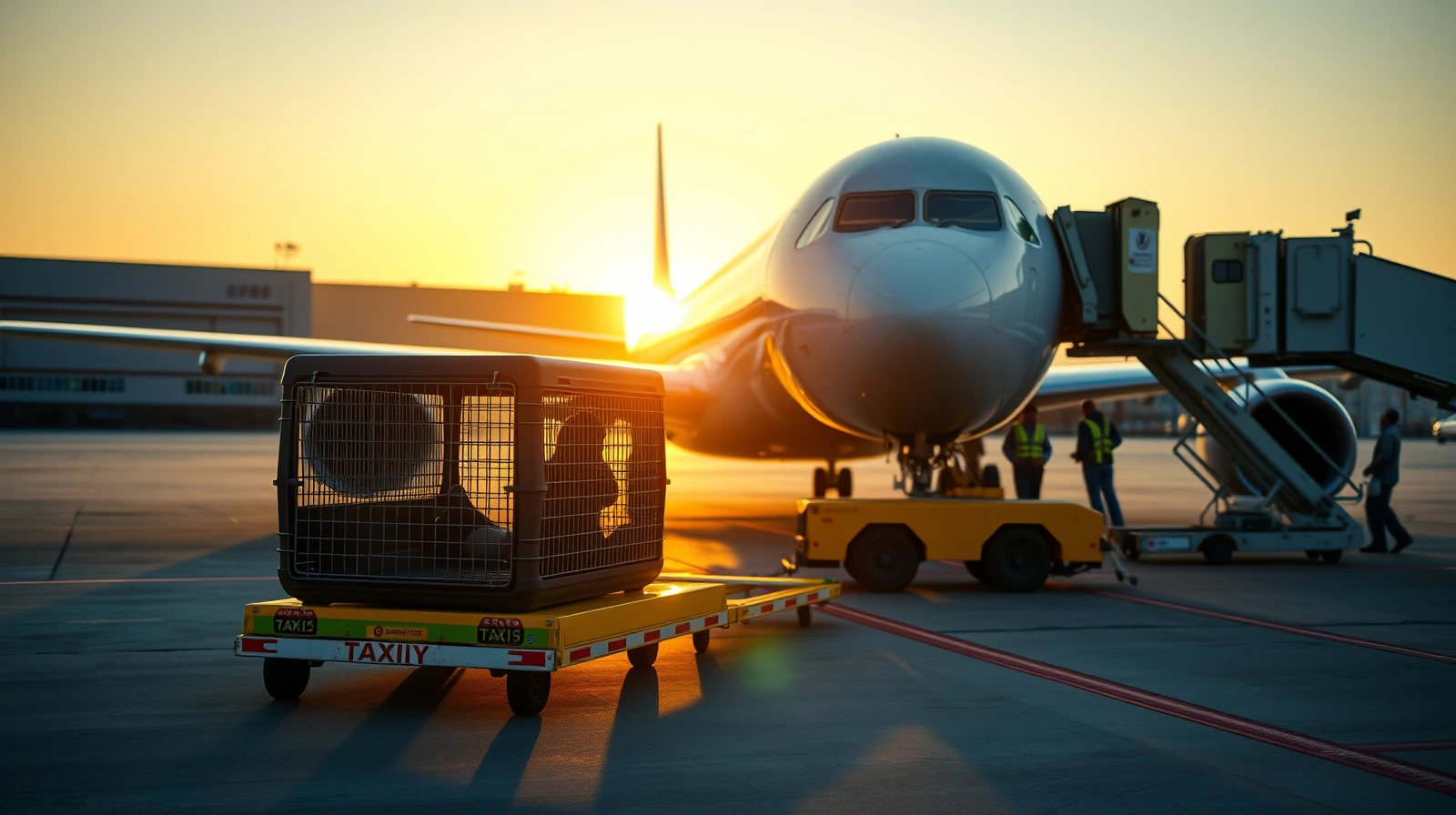
Virgin Atlantic does not take pets in the cabin except trained service dogs. Cats and dogs travel in the temperature-controlled hold as manifest cargo, arranged through an approved IPATA pet shipping agent, not booked as baggage. Always confirm current rules on virginatlantic.com or with your agent.
If you are flying a cat or dog between the United States and the United Kingdom, the Virgin Atlantic pet policy is one of the first things you need to decode, and it works very differently from a domestic US carrier. The short version: Virgin Atlantic does not carry pets in the passenger cabin, the only animals allowed beside you are trained service or assistance dogs, and everyone else's cat or dog travels in the temperature-controlled hold as manifest cargo, arranged through an approved pet shipping agent rather than booked like a suitcase. Below we walk through what that means for a US traveler, what to confirm, and where the figures come from. Policies and fees change, so treat this as a map, not a quote, and verify the details on Virgin Atlantic's official pet page or with your agent before you commit.
Flying a different airline? See our guide to Lufthansa Pet Policy.
No pets in the cabin (with one exception)
This is the headline fact, and it surprises a lot of US travelers used to in-cabin pet carriers on domestic flights. Virgin Atlantic does not accept pets in the cabin on its aircraft. There is no under-seat carrier option, no matter how small your dog or cat is. The single exception is trained service or assistance dogs, which are treated as working animals rather than pets and are generally permitted in the cabin at no charge, subject to advance notice and documentation requirements. Emotional support animals are a separate category and, under current rules reported by multiple pet-travel sources, are not accepted in the cabin as service animals. If your dog is a recognized assistance dog, that is the only path to having an animal travel alongside you, and you should arrange it well ahead of departure. For the broader context on cabin versus hold travel, see our explainer on pet cargo versus in-cabin travel.
Flying a different airline? See our guide to Turkish Airlines pet policy.
How pets actually travel: the hold, as cargo
For ordinary pets, Virgin Atlantic moves cats and dogs in the aircraft hold, in a section that is described as temperature-controlled and pressurized, the same environment principle used across reputable airline live-animal programs. The critical distinction for planning is that this is handled as manifest cargo, not as accompanied checked baggage. In practice that means the booking does not sit on your passenger ticket, it is processed separately through the airline's cargo operation, and it is typically arranged on your behalf by an approved pet shipping agent rather than directly by you at a check-in desk. Note that coverage can shift: at least one pet-travel resource has reported periods where Virgin Atlantic limited acceptance, which is exactly why confirming live capability for your specific route and dates with an agent matters. If you want to understand the trade-offs of hold travel in general, our guide to pet transport to the UK covers the route-level picture.
Why you book through an approved (IPATA) agent
Because pets move as cargo and not baggage, the normal route is to use a professional pet shipping agent, and airlines commonly point travelers toward members of IPATA, the International Pet and Animal Transportation Association. A good agent does the heavy lifting that is hard to coordinate solo: securing the cargo space, confirming the crate meets specification, lining up documents, and managing handover at both the US origin airport and the UK arrival point. For a transatlantic move with UK entry rules layered on top, that coordination is the main reason most owners do not attempt a do-it-yourself booking. The agent should also be your source of truth on whether Virgin Atlantic is currently accepting pets on your route, what the timeline is, and what it will cost. Advance agreement is required, so do not assume space is available on short notice.
Crate and carrier requirements (IATA standard)
Pets traveling in the hold must be in a crate that meets the IATA Live Animals Regulations standard. In broad terms that means a hard-sided, rigid, non-collapsible crate (hard plastic or, for larger dogs, reinforced material), with ventilation on all four sides, a leak-proof base with absorbent bedding, secure door fastenings, and bolts or pins that lock the top and bottom halves together. The crate must be large enough for the animal to stand, turn around, and lie down naturally. Specific minimum dimensions get quoted in different ways by different sources, with some citing roughly 71 x 52 x 54 cm as a reference and others stating the airline will not accept cages below around 53 x 40 x 38 cm. Because these numbers vary by source and the right size depends entirely on your individual animal, do not buy a crate off a number you read online. Confirm the exact requirement and sizing with your agent and against Virgin Atlantic's current published guidance.
Breed and age restrictions
Two categories of restriction matter most. The first is brachycephalic, or snub-nosed, breeds. Flat-faced dogs such as French Bulldogs, Pugs, and Bulldogs, and snub-nosed cats such as Persians, face elevated breathing risk in air travel, and airlines commonly restrict or bar them from the hold for welfare reasons. If you have a flat-faced breed, treat hold travel as likely off the table and confirm specifically. Our piece on the snub-nosed dog breeds flying ban explains why. The second is legal breed bans: dogs covered by the UK's Dangerous Dogs Act are prohibited from import, which means certain breed types simply cannot be flown into the UK regardless of carrier. There is also a minimum age, often cited around 15 weeks, which dovetails with UK rabies-vaccination timing rules discussed below. Verify both the breed list and the exact minimum age with your agent before planning anything.
Key rules at a glance
| Rule | What to expect (confirm before booking) |
|---|---|
| Cabin pets | Not allowed, except trained service or assistance dogs |
| Service dogs | Allowed in cabin, generally free, advance notice and documents required |
| Other pets | Travel in temperature-controlled, pressurized hold as manifest cargo |
| Animals accepted | Cats and dogs only (no exotics, reptiles, rodents) |
| Booking method | Via approved IPATA pet shipping agent, not as baggage; advance agreement required |
| Crate | IATA-compliant, hard-sided, non-collapsible, 4-side ventilation; confirm exact size |
| Breed limits | Brachycephalic breeds restricted; Dangerous Dogs Act breeds barred from UK |
| Minimum age | Often cited around 15 weeks; confirm with agent |
| Typical route | Transatlantic US to UK; UK entry rules apply on arrival |
The route reality: US to UK entry rules
Flying the pet is only half the job. The UK has its own import requirements, and meeting them in the right order is what keeps your animal out of quarantine. According to GOV.UK, a dog or cat entering Great Britain needs an ISO-standard 15-digit microchip implanted before its rabies vaccination, a valid rabies vaccination given when the animal is at least 12 weeks old, and then a wait of at least 21 full days after that vaccination before travel. Dogs also need tapeworm treatment in a defined window before arrival. Post-Brexit, pets traveling from the US typically enter on an Animal Health Certificate, which a vet issues no more than 10 days before entry. The US-side export process is summarized by USDA APHIS, which is the federal authority for outbound pet travel. Done correctly and in sequence, most pets arrive quarantine-free; get the order or paperwork wrong and UK authorities can quarantine the animal for up to four months or refuse entry. Our companion guide on a pet health certificate for travel breaks down the document side.
What it costs, and why you need a quote
There is no single published price for a pet on Virgin Atlantic, because hold transport as cargo is quoted, not fixed. The total depends on crate size and weight, the specific route and season, fuel and handling surcharges, and your agent's service fee for managing the move end to end. On top of the airline's cargo charge, budget for vet visits, the rabies vaccination and microchip, the Animal Health Certificate, tapeworm treatment, the crate itself, and ground transport at both ends. For a transatlantic move this commonly adds up to a substantial figure, but quoting a number here would mislead you, since real prices swing widely. The only reliable approach is to get a written quote from an approved agent for your animal, your route, and your dates. For service-dog cabin travel, by contrast, there is generally no charge for the dog. If you also want to compare what in-cabin pet travel looks like on carriers that allow it, see our overview of flying with a dog in cabin.
How Virgin Atlantic compares, and how to confirm
Virgin Atlantic's hold-only, cargo-via-agent model is common among long-haul carriers, and its closest peer for US-to-UK travelers is British Airways, whose approach we cover in our British Airways pet transport guide. The practical decision usually comes down to which carrier your chosen agent can secure space on for your route and dates, since agents work across multiple airlines. The one constant across all of this is that the rules move. Acceptance can pause, crate specs get refined, fees change, and UK entry requirements are updated periodically. Before you spend a dollar, confirm the current Virgin Atlantic pet policy on the airline's official pet page and have your IPATA agent verify live capability for your specific itinerary. Treat any figure in this article as a directional reference to be checked, not a promise.
Can I bring my dog or cat in the cabin on Virgin Atlantic?
How do pets travel on Virgin Atlantic then?
Do I have to use an IPATA agent?
What kind of crate do I need?
Are there breed restrictions?
What does my pet need to enter the UK from the US?
How much does it cost to fly a pet on Virgin Atlantic?
Is the policy ever paused or changed?
Sources & references
- virginatlantic.com https://www.virginatlantic.com/help/customer-information/travelling-with-pets
- gov.uk https://www.gov.uk/bring-pet-to-great-britain
- aphis.usda.gov https://www.aphis.usda.gov/pet-travel/us-to-another-country-export/pet-travel-us-united-kingdom-great-britain-england-scotland
- iata.org https://www.iata.org/en/programs/cargo/live-animals/pets/
- ipata.org https://www.ipata.org/