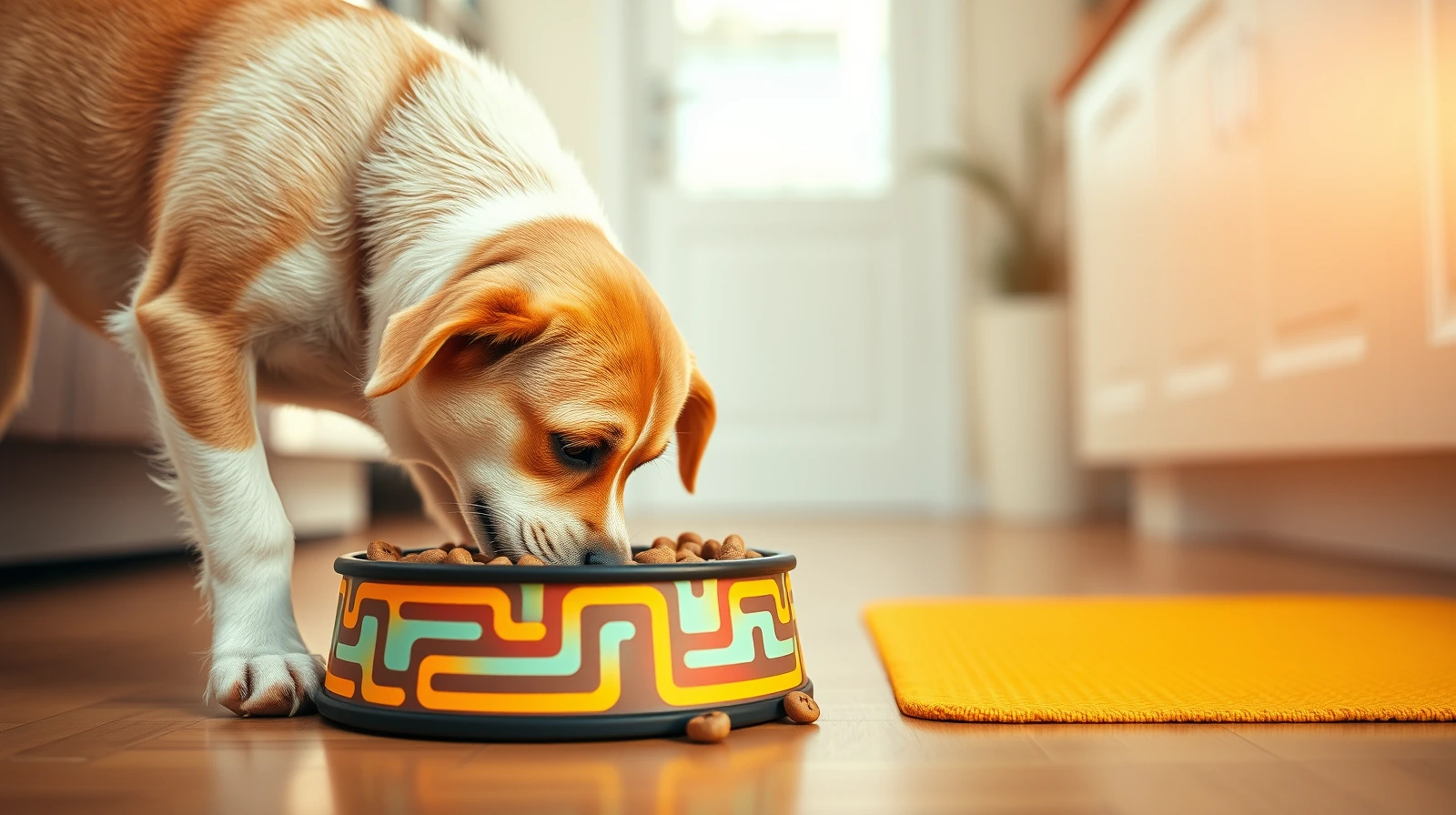
A slow feeder bowl uses ridges or mazes to stretch a fast eater's meal and cut gulping. Match the maze difficulty, size and shape to your dog: shallow designs for flat-faced breeds, stainless for hygiene, easier mazes for puppies and seniors. Always confirm current pricing before you buy.
If your dog inhales dinner in fifteen seconds flat, then burps, coughs, or brings it back up, a slow feeder bowl is one of the cheapest fixes you can buy. These bowls put ridges, mazes, or posts in the way of the food so your dog has to work for each bite. That stretches a thirty-second meal into several minutes, cuts the gulping and the air-swallowing that comes with it, and adds a small dose of mental work at mealtime. This guide walks through why fast eating matters, the main bowl types, how to choose, and which style suits which dog.
Gearing up for your pet? Compare our pick for the Best Calming Aids for Dog Travel in 2026.
Why slow feeders matter
Dogs that eat fast swallow a lot of air along with the kibble. That can lead to gulping, gas, hiccups, regurgitation right after the bowl is empty, and in some cases choking. Slowing the pace gives the digestive system a more reasonable workload and reduces the volume of air that goes down with the food. A slow feeder also turns a passive bowl into a light puzzle, which is useful for high-energy dogs and dogs that are home alone for stretches of the day.
The more serious reason to care about eating speed is bloat. The American Kennel Club notes that fast eaters have a significantly higher risk of bloat than slow eaters, and lists rapid eating among the recognized risk factors. A slow feeder is not a cure, but it directly targets one of the behaviors vets flag. You can read more in the AKC guide to bloat in dogs.
Gearing up for your pet? Compare our pick for the Best Dog Backpack Carriers for Hiking and Travel.
The health framing: what bloat actually is
Bloat, known clinically as gastric dilatation-volvulus or GDV, is a true emergency. According to VCA Animal Hospitals, the stomach fills with gas and can rotate on itself, cutting off blood flow and trapping the contents inside. It can become life-threatening within hours, and it requires immediate veterinary care. Cornell University College of Veterinary Medicine describes it as one of the most serious non-traumatic conditions seen in dogs.
Large, deep-chested breeds carry the most risk: Great Danes, German Shepherds, Standard Poodles, Weimaraners, and similar builds. If you own one of these dogs, a slow feeder is a sensible piece of a larger plan that may also include smaller, more frequent meals and a conversation with your vet about a preventive gastropexy. A bowl alone does not eliminate the risk, so treat it as one layer, not a guarantee. If you ever see a swollen belly, unproductive retching, restlessness, or drooling, call an emergency vet immediately. We are an editorial site and this is general information, not veterinary advice.
Gearing up for your pet? Compare our pick for the Best Dog Cooling Vests for Hot Weather.
The main types of slow feeders
"Slow feeder" covers a family of products. Here is how they differ and who each one suits.
- Molded maze and ridge bowls. The classic style. A single bowl with raised ridges, swirls, or posts that the dog has to nose around. Most common, easy to find, and the type most people mean by "slow feeder bowl."
- Slow-feeder inserts. A maze plate that drops into a bowl you already own, often a stainless one. Good if you want to keep a metal bowl for hygiene but still slow the dog down.
- Lick mats. Flat silicone mats with textured surfaces. You smear soft food, wet food, or a topper across them and the dog licks it off. Great for soft diets, calming, and crate or bath-time distraction rather than dry kibble.
- Snuffle mats. Fabric mats with dense fronds that hide kibble. The dog sniffs and forages, which is mentally tiring and slows intake. They need washing and are not dishwasher friendly.
- Puzzle feeders. Interactive toys with sliders, flaps, or compartments the dog manipulates to release food. The highest enrichment value and the slowest pace, but more supervision and cleaning.
On material, stainless steel is the easiest to keep clean and does not scratch or harbor odors the way softer plastics can over time. Many maze bowls are plastic for the molding flexibility, which is fine as long as it is food-safe and free of BPA, PVC, and phthalates, and you replace it if it gets gouged. If hygiene is your top concern, look at a stainless bowl with a removable maze insert. For dogs that also need help with water, pair a clean feeder with a fresh-water setup like a good pet water fountain.
How to choose a slow feeder bowl
The right bowl depends on your dog's size, face shape, and how determined an eater they are. Run through these factors.
- Maze difficulty. Brands often sell the same bowl in escalating tiers. Outward Hound, for example, labels its Fun Feeder line Slow, Slower, and Slowest. Start moderate. A maze that is too hard can frustrate a dog into giving up or flipping the bowl.
- Size and capacity. Match the bowl to your dog's meal volume. A Great Dane portion will not fit in a small-dog maze, and an oversized bowl makes the ridges too far apart to slow a small dog.
- Face shape. Flat-faced, brachycephalic breeds like Pugs, Bulldogs, and Boxers struggle with deep, tall mazes. Look for shallow, wide ridge patterns made for short muzzles.
- Non-slip base. A determined dog will push a bowl across the kitchen. A rubber rim or grippy base keeps it in place so the maze actually does its job.
- Dishwasher safe. Mazes have crevices that trap food. Top-rack dishwasher cleaning is worth prioritizing.
- Material safety. For plastic, confirm it is food-grade and free of BPA, PVC, lead, and phthalates. For metal, stainless is the standard.
Representative brands by type
The names below are well-known starting points, grouped by what they do best. We are not quoting exact specs or current prices because both change often by size, color, and retailer. Treat the price bands as rough orientation and confirm the current price and dimensions on the product page before you buy.
- Outward Hound Fun Feeder Slo Bowl (molded maze, budget to mid band). The category staple, sold in multiple maze difficulties and sizes including shallower options for flat-faced dogs. See the Outward Hound Fun Feeder page.
- Outward Hound Fun Feeder Stainless Steel Slo Bowl (stainless with insert, mid band). A metal bowl with a removable maze insert for owners who prioritize hygiene. Details on the stainless Fun Feeder page.
- Neater Pets (maze bowls and feeding systems, budget to mid band). Known for slow-feed designs and mess-catching feeders.
- Frisco (store-brand maze bowls, budget band). A widely available value option in plastic and stainless variants.
- SodaPup (lick mats and durable feeders, mid band). Strong on silicone lick mats and tougher chew-resistant designs.
Whatever you pick, buy from the brand or a reputable retailer so you are getting the genuine food-safe product and not a knockoff with unknown materials.
Matching the bowl to your dog
Use this table to narrow the field by your dog's situation, then confirm size and current price on the product page.
| Use case | Best bowl type | What to look for | Rough price band |
|---|---|---|---|
| Fast gulpers | Molded maze, moderate to high difficulty | Tight ridge pattern, non-slip base | Budget to mid |
| Large or deep-chested breeds | Large-capacity maze bowl, floor level | Full meal capacity, heavy non-slip base | Mid |
| Flat-faced (brachycephalic) | Shallow, wide-ridge maze | Short, gentle ridges for short muzzles | Budget to mid |
| Puppies and seniors | Easy maze or lick mat | Low difficulty, gentle on teeth and joints | Budget |
| Hygiene priority | Stainless bowl with removable insert | Dishwasher safe, no plastic to scratch | Mid |
| Budget | Store-brand plastic maze | Food-safe plastic, non-slip rim | Budget |
A few practical notes by dog type. Puppies do best with an easy maze so eating stays positive, and a lick mat is a gentle entry point. Seniors with worn teeth or stiff necks may prefer a shallow maze or a lick mat over a deep, demanding bowl. Flat-faced dogs need shallow ridges or they will simply give up. Large breeds should keep the bowl at floor level, since some research suggests elevated feeders can speed eating, which works against you. If your dog is a relentless gulper, step the maze difficulty up gradually rather than starting at the hardest tier.
Getting the most out of a slow feeder
The bowl is one piece of the routine. Splitting the daily ration into two or three smaller meals helps more than a single large bowl, and it spreads enrichment across the day. Feed in a calm spot, and separate dogs in multi-dog homes so no one races to finish first. Clean the maze after wet or sticky food so crevices do not turn into a problem. And keep eating relaxed: a dog that is anxious at mealtime, including after car travel, may bolt food, so settling routines matter. If meals coincide with stressful events, our notes on managing dog car anxiety may help.
For households automating feeding, you can pair a slow feeder with a scheduled dispenser, though most automatic units drop food into a plain tray. Compare options in our guide to the best automatic pet feeders. And for travel, a slow feeder rarely makes sense on the road, so a packable bowl plus a good dog travel water bottle covers meals away from home, while a secure dog crate keeps mealtime contained when you are out.
Do slow feeder bowls actually prevent bloat?
Are slow feeder bowls safe for flat-faced breeds?
Stainless steel or plastic, which is better?
How much do slow feeder bowls cost?
What maze difficulty should I start with?
Are slow feeders good for puppies?
Can I put a slow feeder in the dishwasher?
My large dog eats fast. Should I use an elevated slow feeder?
Sources & references
- akc.org https://www.akc.org/expert-advice/health/bloat-in-dogs/
- vcahospitals.com https://vcahospitals.com/know-your-pet/bloat-gastric-dilatation-and-volvulus-in-dogs
- vet.cornell.edu https://www.vet.cornell.edu/departments-centers-and-institutes/riney-canine-health-center/canine-health-topics/gastric-dilatation-volvulus-gdv-or-bloat
- outwardhound.com https://outwardhound.com/fun-feeder-slo-bowl-slow-feeder-dog-bowl/
- outwardhound.com https://outwardhound.com/fun-feeder-stainless-steel-slow-feeder-dog-bowl/